See what changed.
Then see how it works.
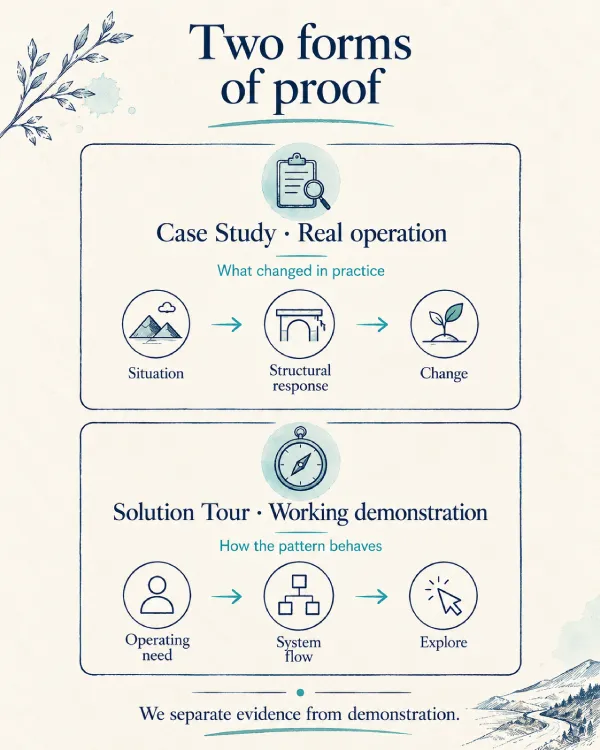
We use two forms of proof. Case Studies show what changed inside real client operations. Solution Tours let visitors inspect how a relevant workflow or connected system can behave without entering a confidential client environment.
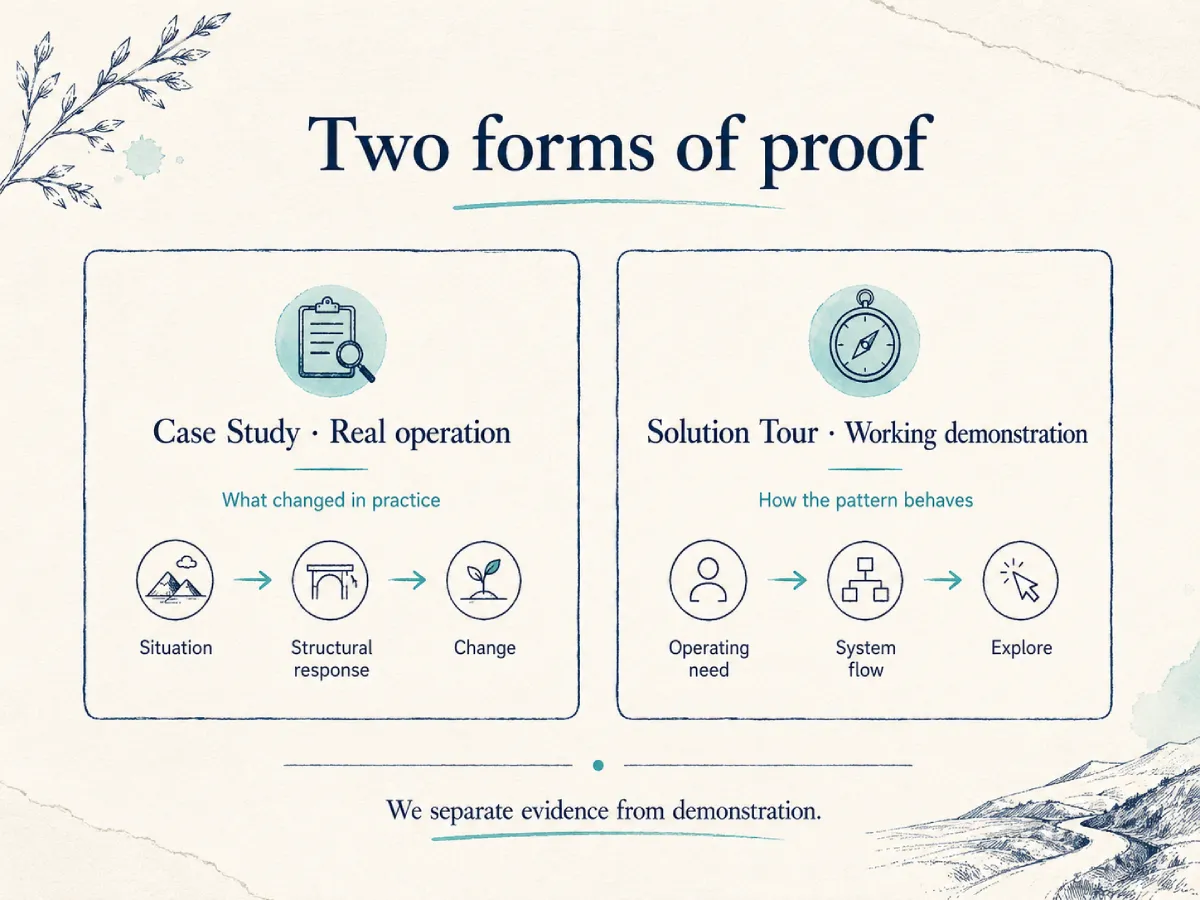
We show the evidence in the form that best answers the question.
Use a Case Study when the question is “What changed in a real operation?” Use a Solution Tour when the question is “How could this working pattern behave?”
Case Studies
Real client work, organised around the operating situation, the structure introduced and the supportable change.
Solution Tours
Safe, unbranded demonstrations that show how information, ownership, automation and visibility can come together around one business need.
We show what changed inside a real operation.
A Case Study begins with the way the business was actually working—not with the software used.
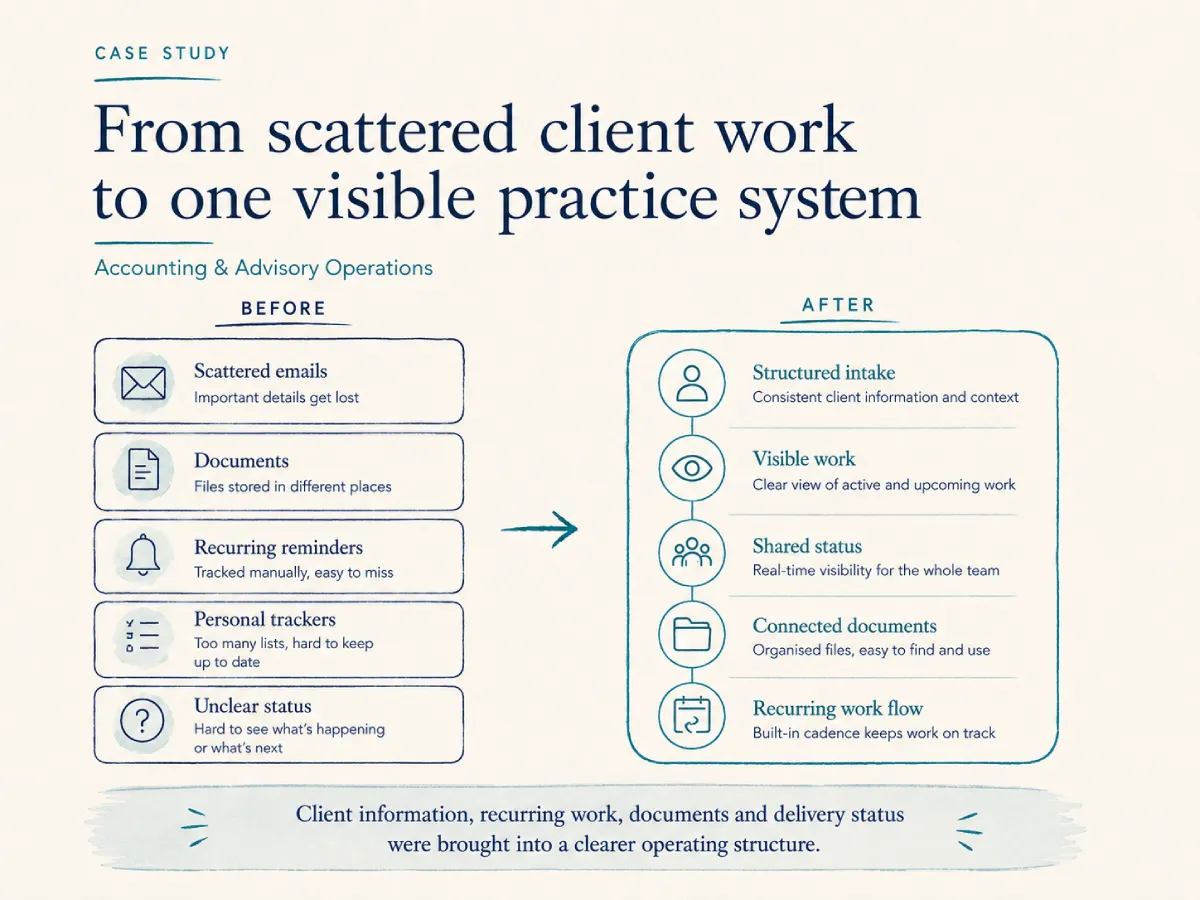
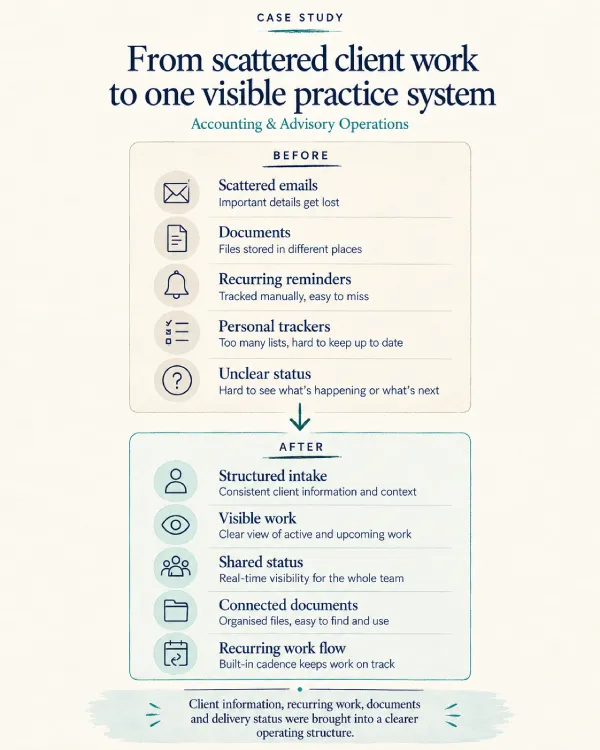
From scattered client work to one visible practice system
Client documents, recurring service work and delivery status were spread across folders, inboxes and individual trackers. Understanding the complete position of a client still required manual checking and follow-up.
We introduced clearer structure around the client, the work and the information supporting it. The aim was not another isolated tool; it was a more dependable operating view.
- Client and service information brought into a clearer structure
- Documents organised around the client and work context
- Recurring work and delivery status made easier to see
- Reporting connected more closely to live work
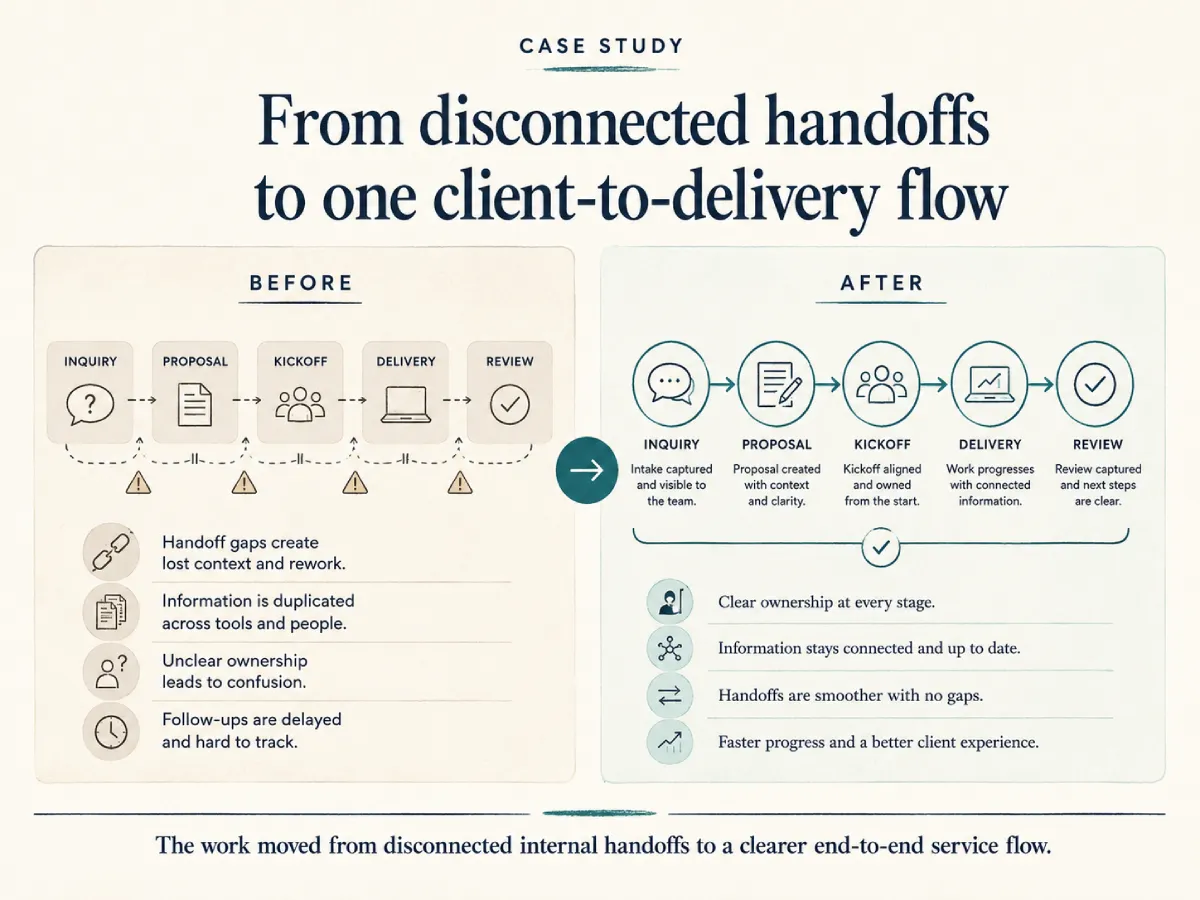
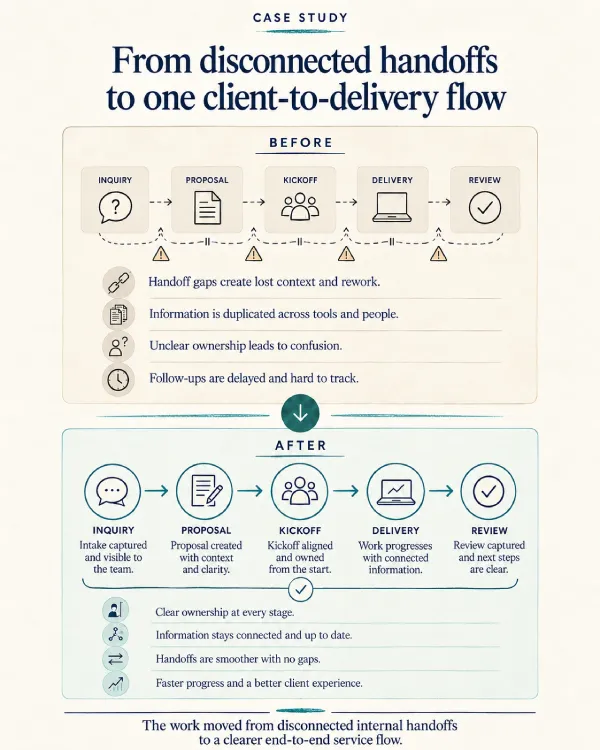
From disconnected handoffs to one client-to-delivery flow
Client information moved through separate systems for enquiries, proposals, documents, delivery and finance. People still had to carry information between them and confirm whether the next step had happened.
We focused on the handoffs rather than replacing every application. The working model made responsibility and progress clearer across the client journey.
- Important client-journey handoffs connected
- Repeated information entry reduced
- Responsibility clarified at each stage
- Progress made easier to understand without rebuilding status
We let visitors inspect how a connected system can behave.
Each Tour is built around one operating need. It shows the flow without pretending to be an exact copy of a client environment.
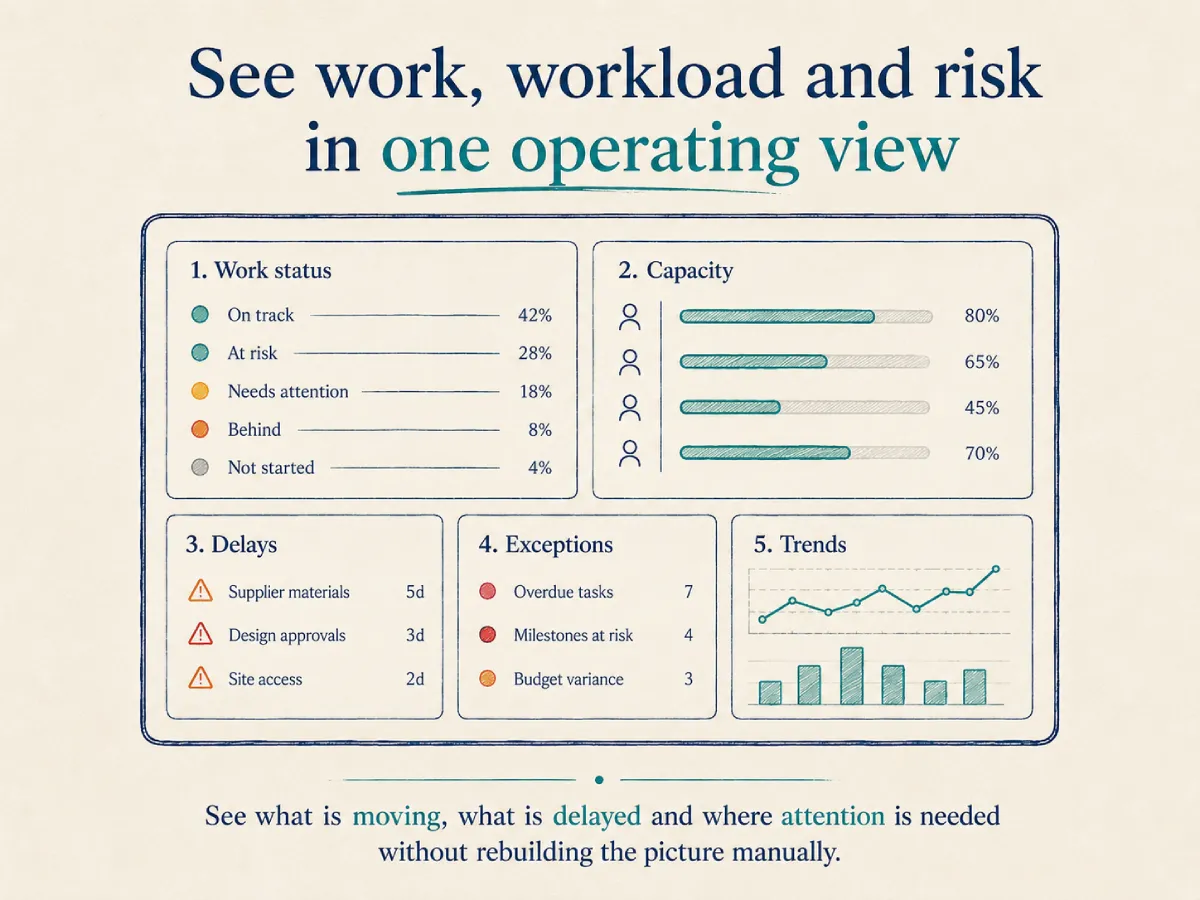
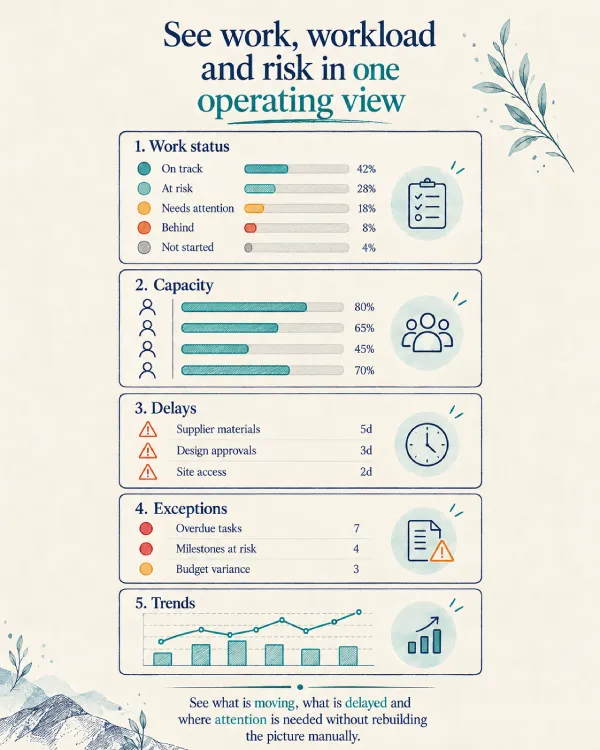
Operations Dashboard Tour
See work, workload and risk in one operating view.
- Current work status
- Due and overdue activity
- Team workload
- Client and service views
- Management exceptions
- Operating trends
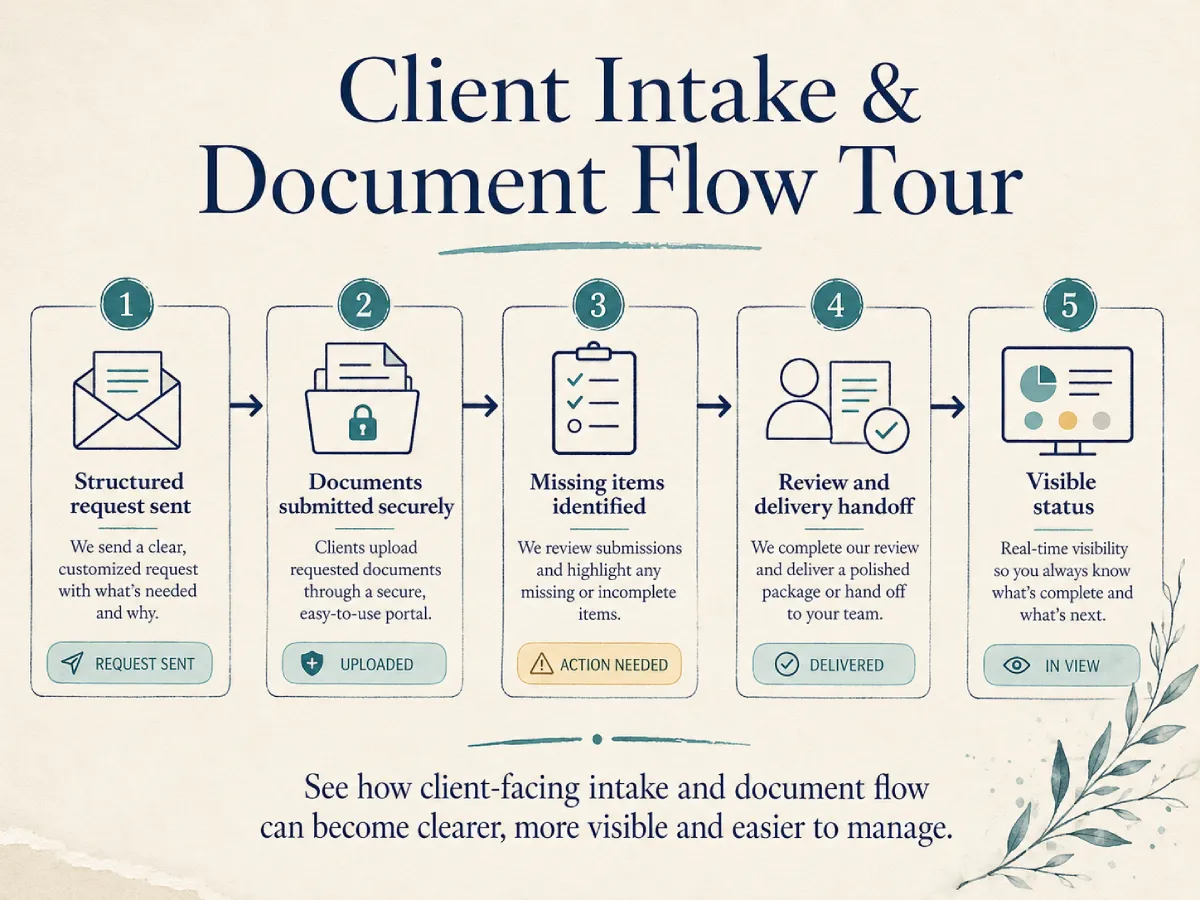
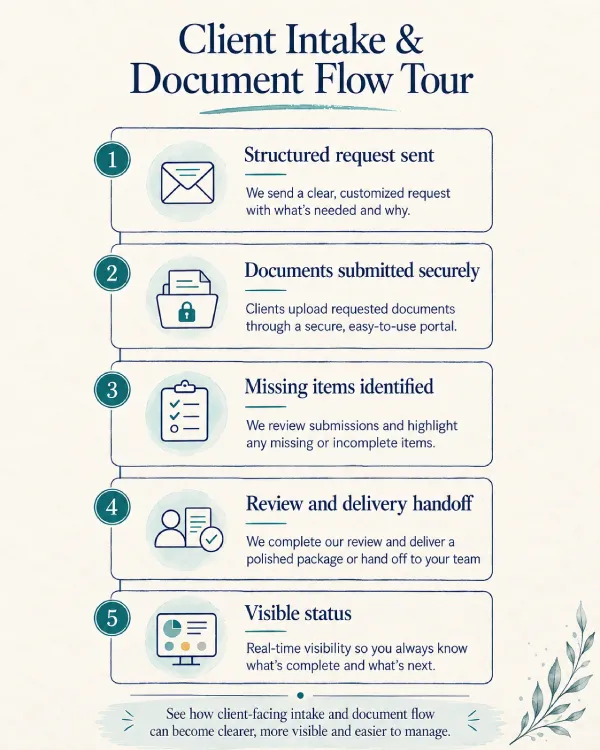
Client Intake & Document Flow Tour
See requests, documents and follow-ups move through one clear process.
Structured request sent
Documents submitted securely
Missing items identified
Review and delivery handoff
- Structured requests
- Secure submission
- Received & missing status
- Reminder flow
- Internal review
- Request history
We show the structure behind the interface.
The strongest proof is often an artefact that explains what was difficult, what structure was introduced and why the decision matters.
Before-and-after workflow
We show where work depended on messages, personal trackers or disconnected handoffs—and how the clearer flow works.
What was difficult
Updates moved through separate places and needed manual checking.
Structure introduced
One visible sequence with ownership and next steps.
Why it matters
Less coordination and fewer actions waiting unnoticed.
Before
After
Operational view
We show a focused management view designed to answer practical questions rather than display every available chart.
What was difficult
Managers rebuilt status from meetings and separate trackers.
Structure introduced
Current work, delay, workload and exceptions in one view.
Why it matters
Attention can move to the right place earlier.
Information structure
We show how documents and records can be organised around the business context in which they are used.
What was difficult
Files existed, but the correct context and version were difficult to confirm.
Structure introduced
Information connected to the client, service and work.
Why it matters
People can find and trust the record without depending on memory.
Services
Work
Information
System handoff map
We show where one application passes information to another, what validates the handoff and how exceptions become visible.
What was difficult
People copied records between systems and checked whether updates matched.
Structure introduced
Defined source, validation and connected update.
Why it matters
Less repeated entry and clearer failure visibility.
Validation
Required fields
Recurring work flow
We show how scheduled work, ownership, review, reminders and completion can be managed through one structured process.
What was difficult
Repeated obligations were recreated and checked manually.
Structure introduced
Scheduled creation, ownership, review and escalation.
Why it matters
Less dependency on memory and more reliable recurring delivery.
Practical decision note
We show the judgement behind the system—not only the final interface.
What was difficult
A system replacement was being considered for a problem outside its core role.
Structure introduced
A narrower connection around the approved business event.
Why it matters
Lower change risk and better use of a system that already works.
Decision
Keep the existing accounting system.
Reason
It performs its core role reliably and the team already understands it.
Improvement
Connect approved service and billing events instead of replacing the platform.
Find the most relevant path
We can also start from the business context or the capability.
Explore by Industry
Find the business environment closest to yours and see the operating friction that commonly appears there.
Explore by Capability
See what we may improve across work, information, automation, connected systems, visibility and client experience.
We begin with the situation
The exact system shown in a Case Study or Tour may not be the right answer for another business. We begin with the part of the operation that feels similar, then determine what a practical first improvement should be.
One recognisable operating problem is enough to begin.