Industry gives us context. The workflow tells us what to improve.
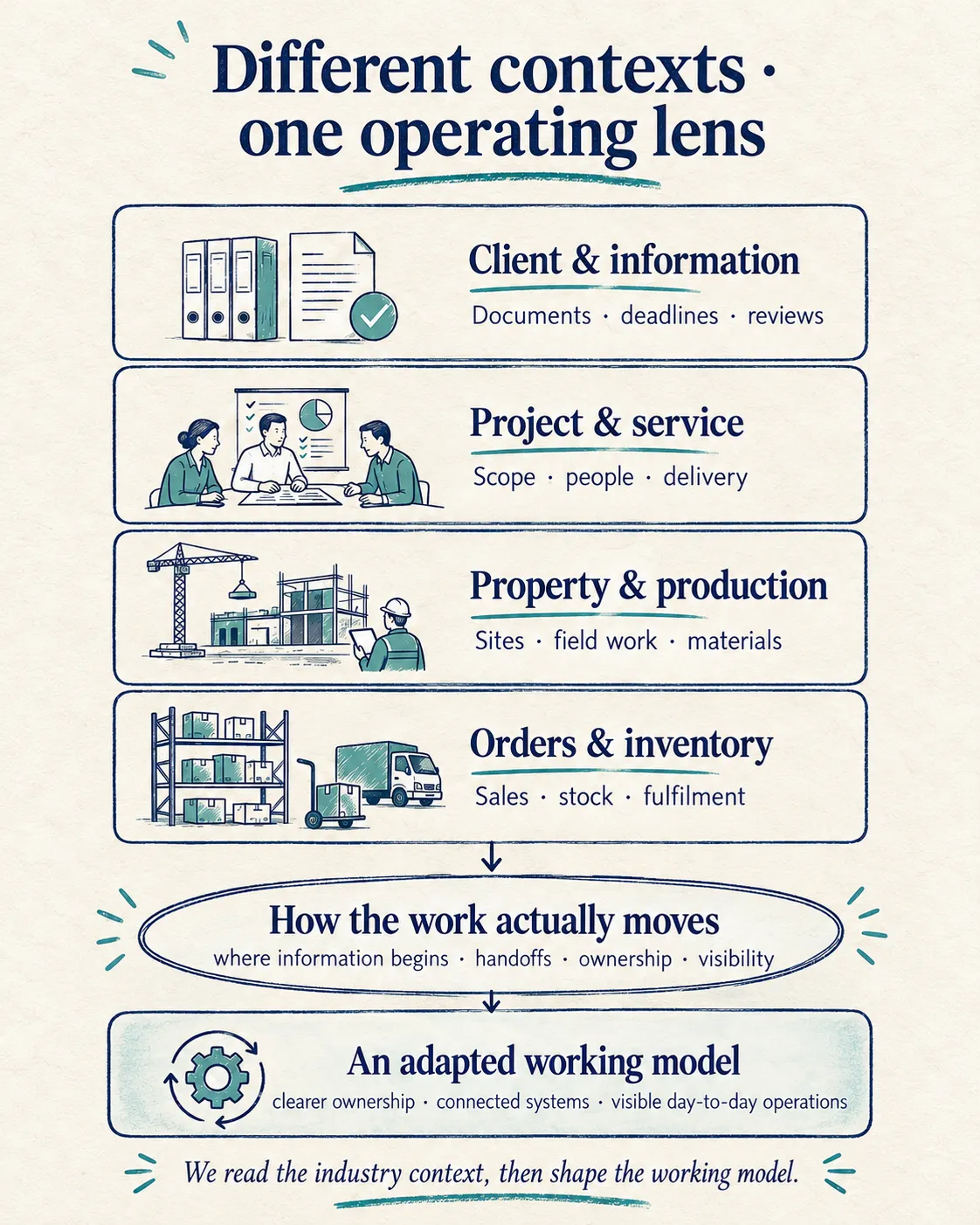
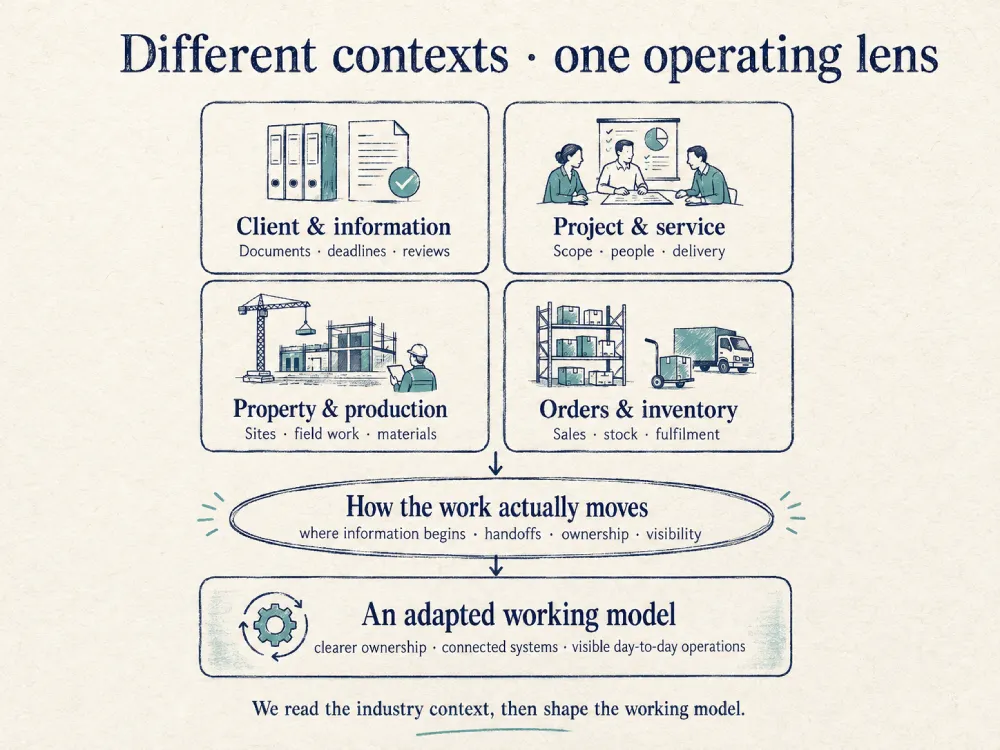
Accounting firms, advisory practices, agencies, retailers and manufacturers operate differently. Yet friction often appears in the same places: how information enters, how work moves, how systems hand off and how leaders see what is happening.
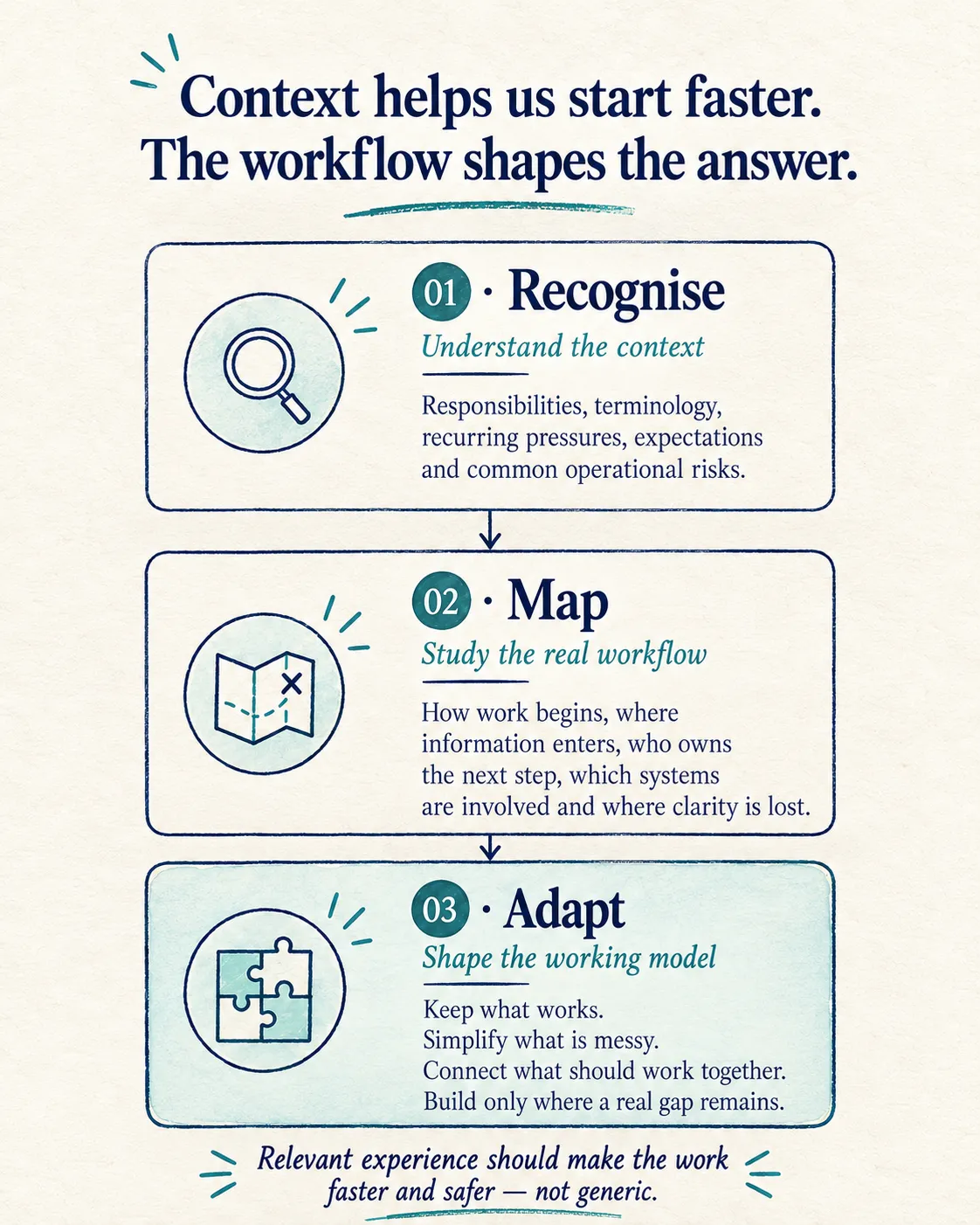
We use industry knowledge to get oriented quickly, then design around the operating reality of the individual business.
Find the business environment closest to yours.
We use the list to help visitors find familiar context quickly. It is a starting point for discovery—not a catalogue of fixed industry products.
Accounting, Tax & Bookkeeping Firms
Work depends on accurate client information, recurring obligations and documents connected to the correct client, service and period.
Law & Legal Services
Legal work depends on reliable matter context, controlled documents, clear reviews and dependable deadlines.
Insurance Agencies & Brokers
Insurance operations involve repeated information collection, policy records, renewals and ongoing client communication.
Financial Advisory & Wealth Management
Advisory relationships depend on complete client context, secure information and consistent review cycles.
Consulting & Business Advisory Firms
Consulting firms coordinate clients, scope, projects, people, time and financial performance.
Marketing, Creative & Digital Agencies
Agency work moves through briefs, production, feedback, revisions, approvals and delivery.
Architecture, Engineering & Design Firms
Design and engineering work depends on controlled files, project stages, technical reviews and coordination between several parties.
Real Estate & Property Operations
Property operations bring together sites, tenants, owners, vendors, maintenance requests, documents and financial information.
Retail & Ecommerce
Retail and ecommerce connect customer orders, stock, fulfilment, support, returns and finance.
Wholesale & Distribution
Wholesale and distribution coordinate customers, pricing, orders, inventory, warehouses, deliveries, credit and finance.
Manufacturing
Manufacturing connects sales demand, materials, production, quality, inventory, procurement and finance.
The operating pattern may still be familiar. The list is not a qualification boundary.
The work looks different.
The operating friction is often familiar.
Industry names describe the setting. We use these four patterns to reveal where the operation is actually losing time, control or visibility.
Work waits for information, documents or review.
Friction grows when requests move through email and messages, different people maintain their own lists and nobody has one dependable view of what is complete.
Delivery, capacity and commercial information live separately.
Leadership often reconstructs the project position from meetings, task systems, timesheets and finance records after the fact.
Important activity happens away from the central systems.
Site, property or production-floor events may be captured through calls, paper, messages or local spreadsheets and copied later.
Orders, stock and fulfilment do not stay aligned.
Teams move between several applications, reconcile stock manually and piece together the complete order position.
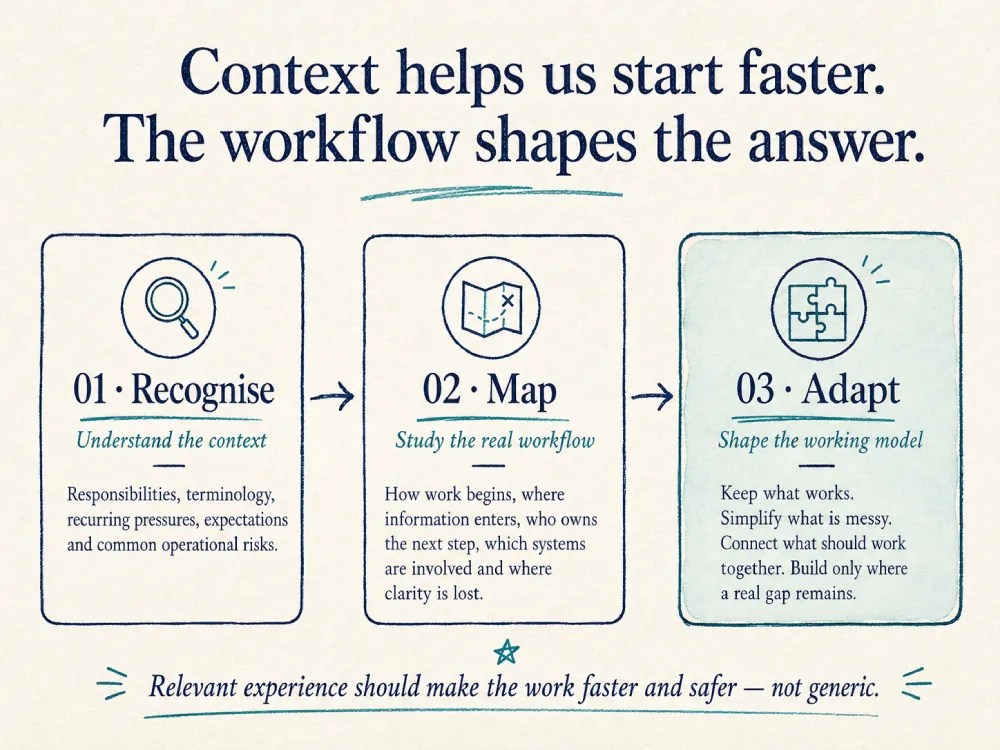
We bring relevant patterns. We still design around the individual operation.
Industry experience helps us recognise familiar risks, terminology and workflow patterns faster. It should shorten discovery—not replace it.
The details change by industry.
The operating needs often connect.
Client and customer intake
We help make requests, submissions and onboarding clearer from the beginning.
Documents and business information
We help organise records around the client, project, property, order or service they support.
Work, ownership and handoffs
We help make responsibility, progress and next steps easier to understand.
Recurring processes and follow-ups
We help reduce dependency on personal reminders and repetitive chasing.
Connected systems and data
We help information move between the applications involved in the same business process.
Operational visibility
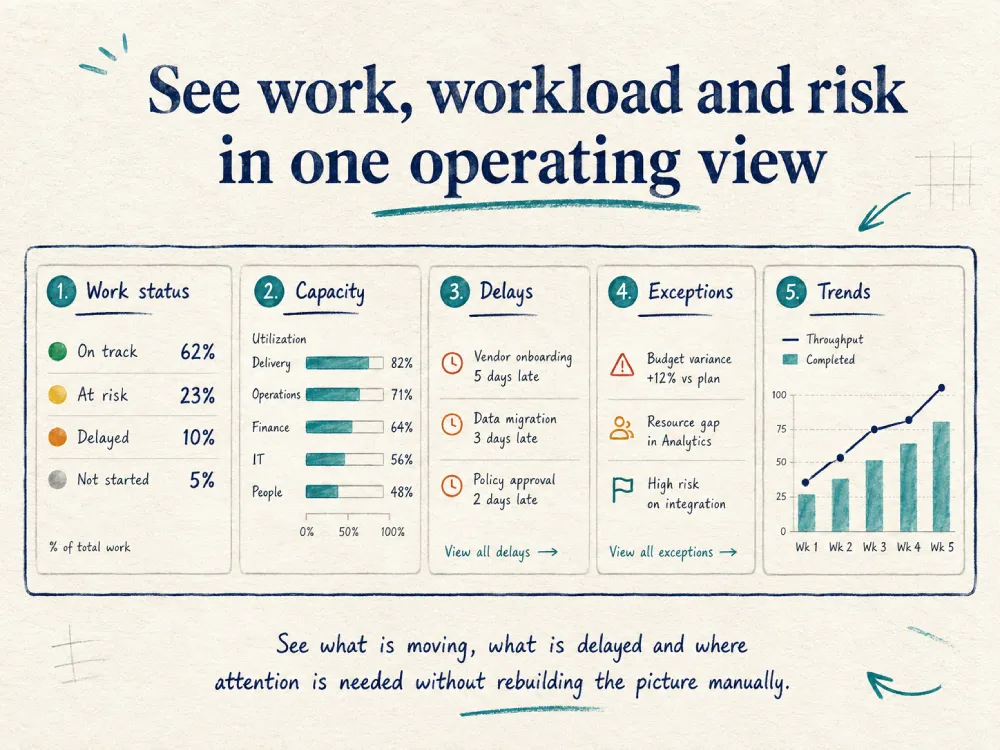
We help give managers a clearer view of progress, workload, delays, exceptions and risk.
See the operating change—and the working system behind it.
We use Case Studies to show what changed inside real work. Solution Tours show how a relevant system can behave.
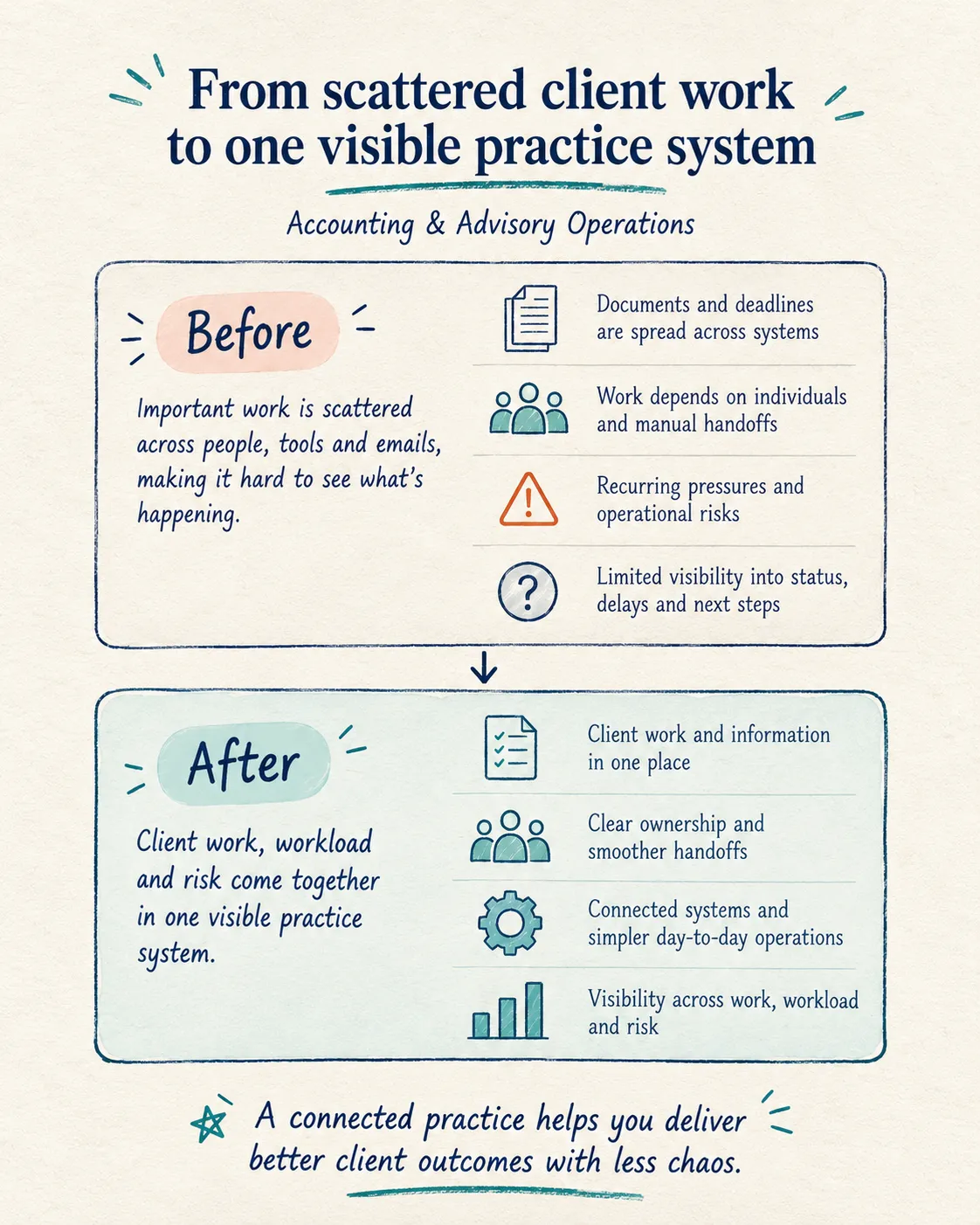
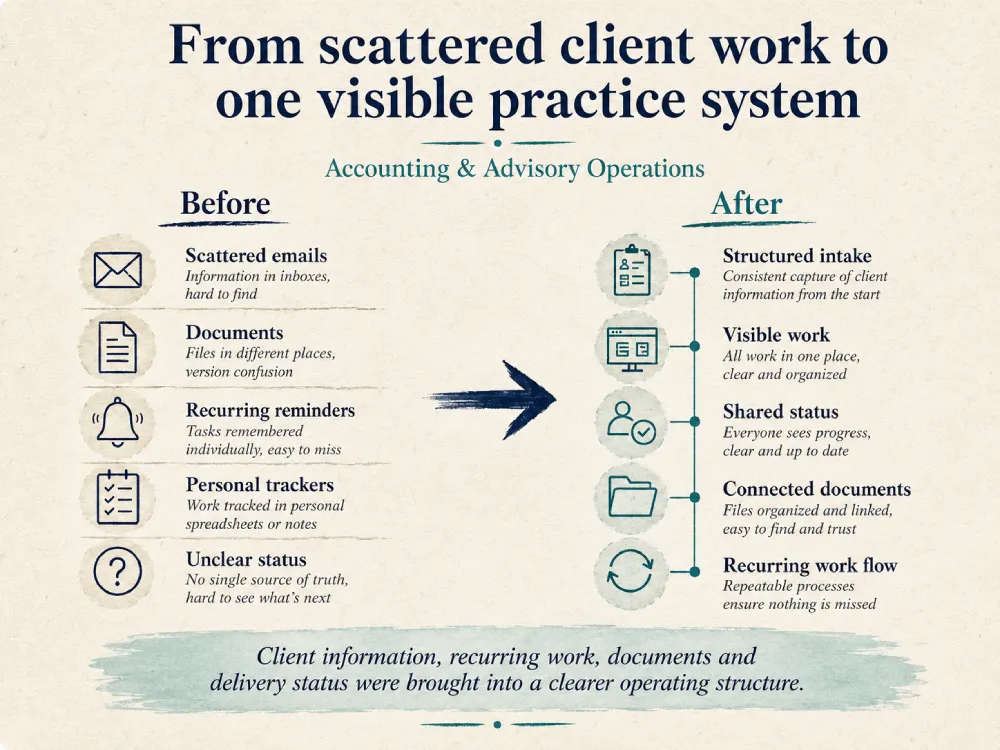
From scattered client work to one visible practice system
Client information, recurring work, documents and delivery status were brought into a clearer operating structure.
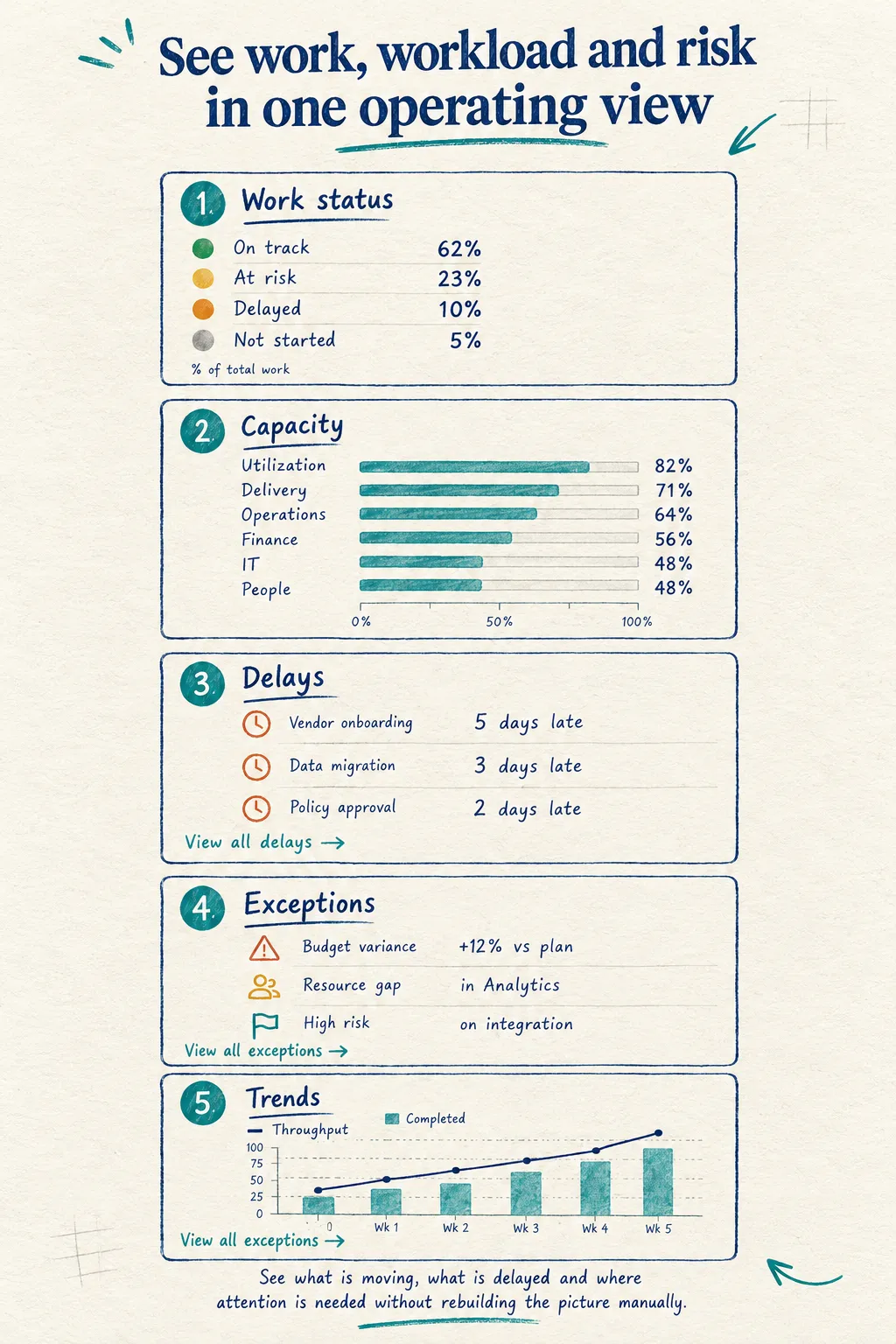
See work, workload and risk in one operating view
See what is moving, what is delayed and where attention is needed without rebuilding the picture manually.
The exact combination depends
on the operation.
We work across several core capabilities to build the right system for the workflow.