
A consulting practice built around how businesses actually operate.
Sahaj Views is a founder-led software and systems consulting practice for growing businesses that need the way work, information, people and technology fit together to become clearer. We start with the operating reality—not a software catalogue—and use technology only where it makes the operation more connected, manageable and easier to run.
Sometimes that means improving what already exists. Sometimes it means connecting systems or building something focused. The objective is not more technology. It is a better way for the business to operate.
More than two decades working where software meets day-to-day operations.
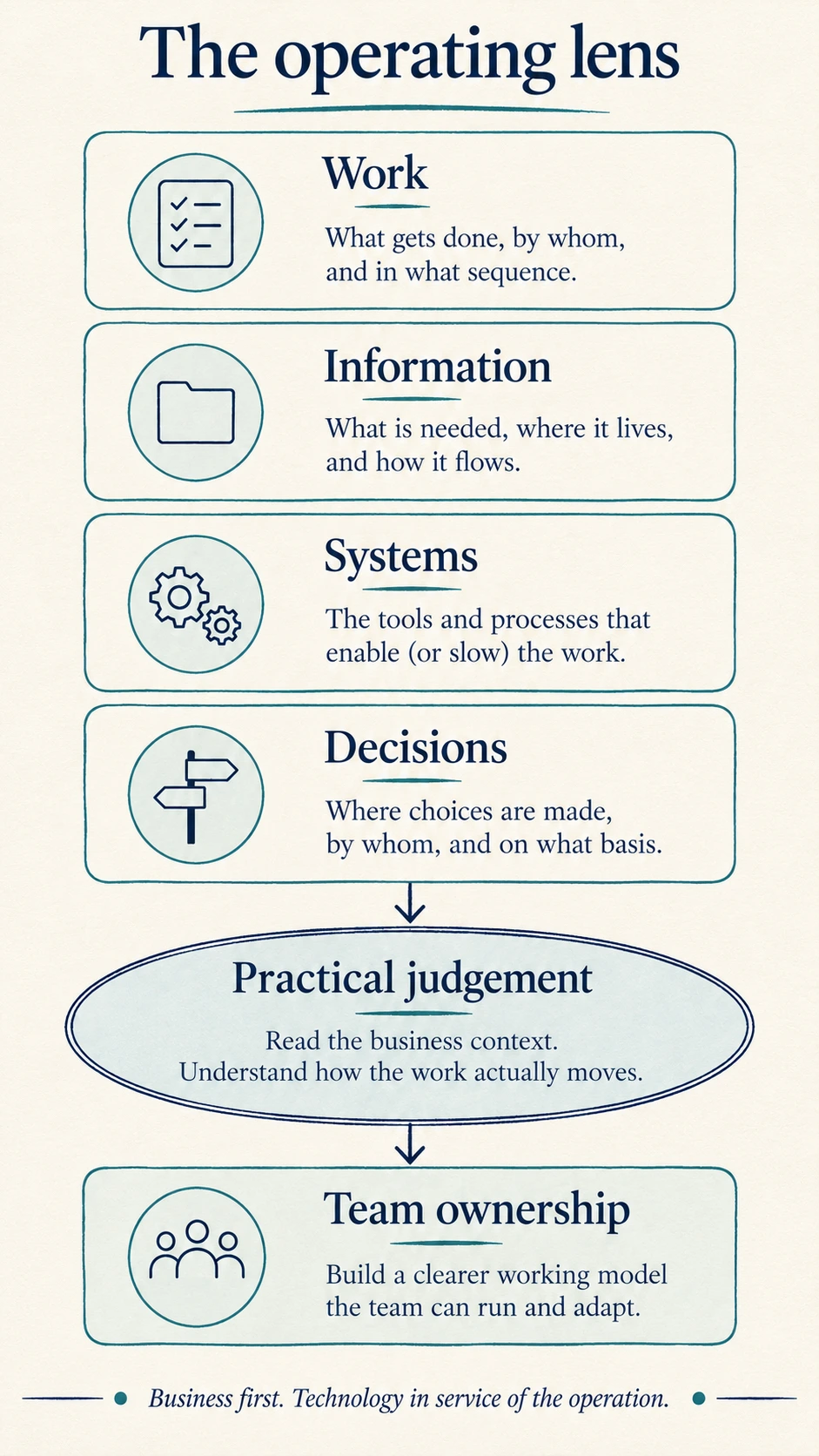
Chetan's background spans software development, Microsoft and business platforms, information management, workflow automation, connected applications, reporting and custom systems. Over time, the recurring lesson became clear: technical capability is only one part of whether a system succeeds.
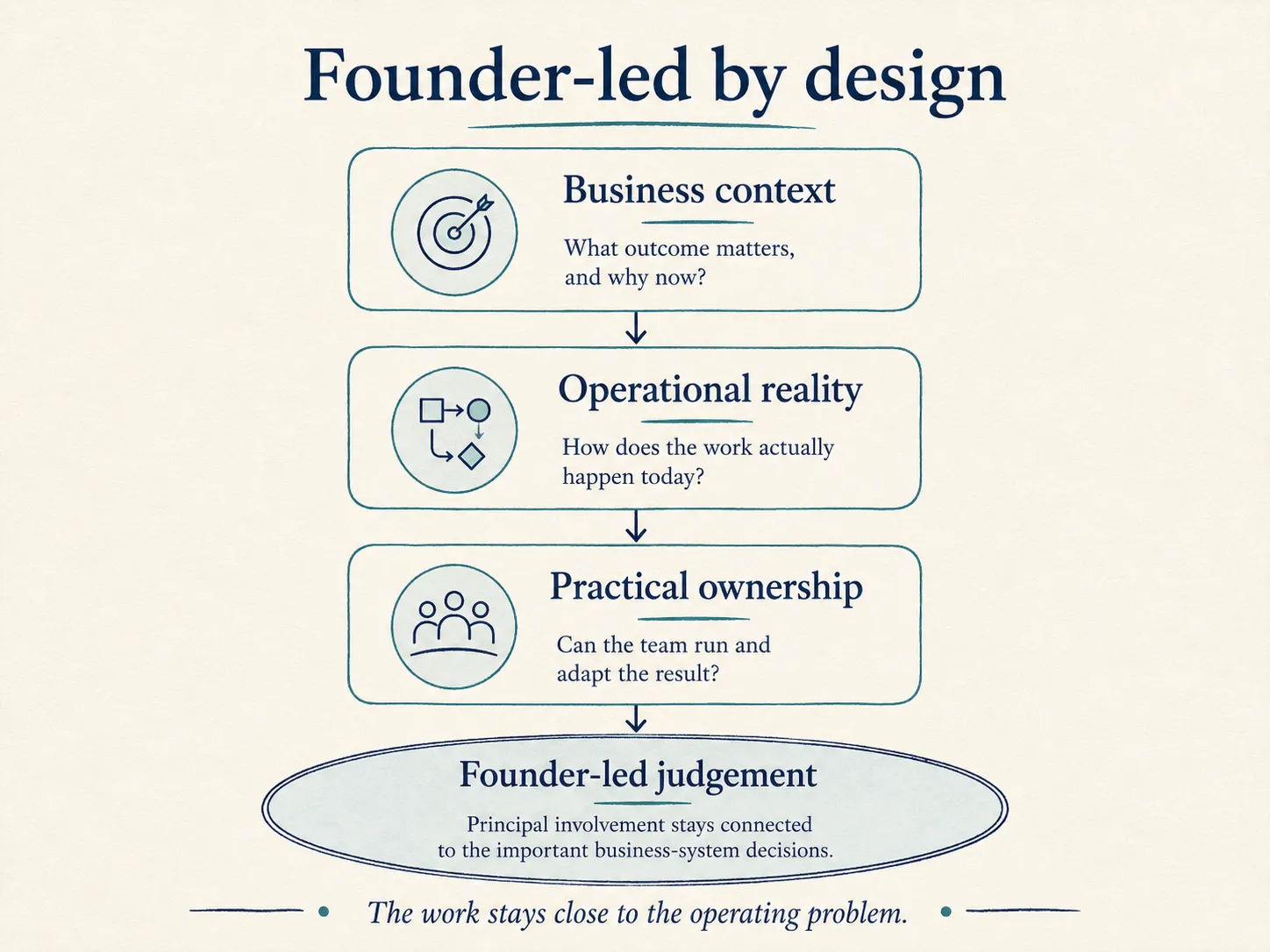
That is the thinking behind Sahaj Views. The practice combines technical depth with operational judgement—looking at the workflow, the information, the people involved, the current systems and the business outcome before deciding what should change.
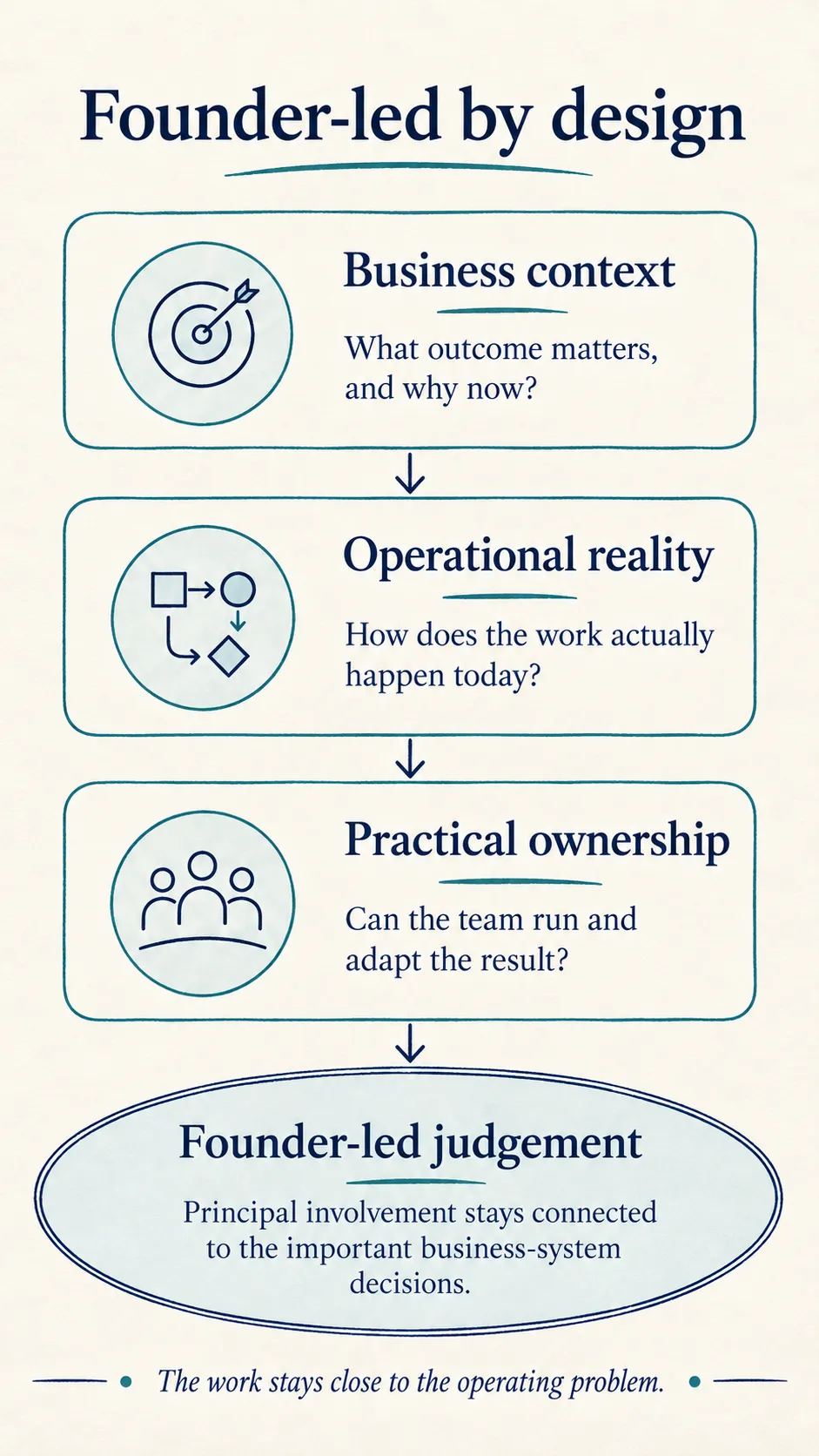
The founder remains close to the problem definition, major solution decisions and review of the working result. That keeps the context behind those decisions connected from the first conversation through handover.
Sahaj Views
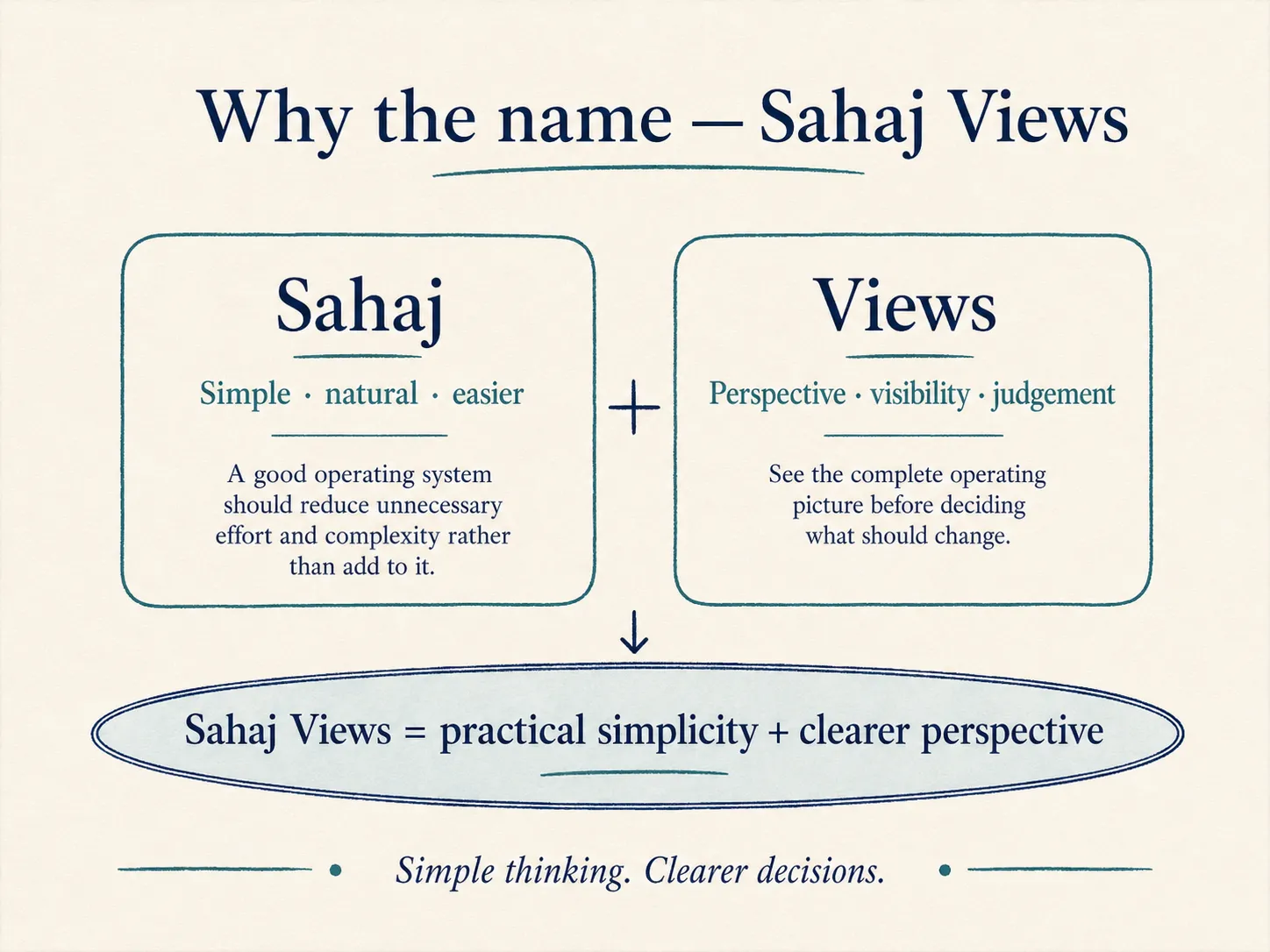
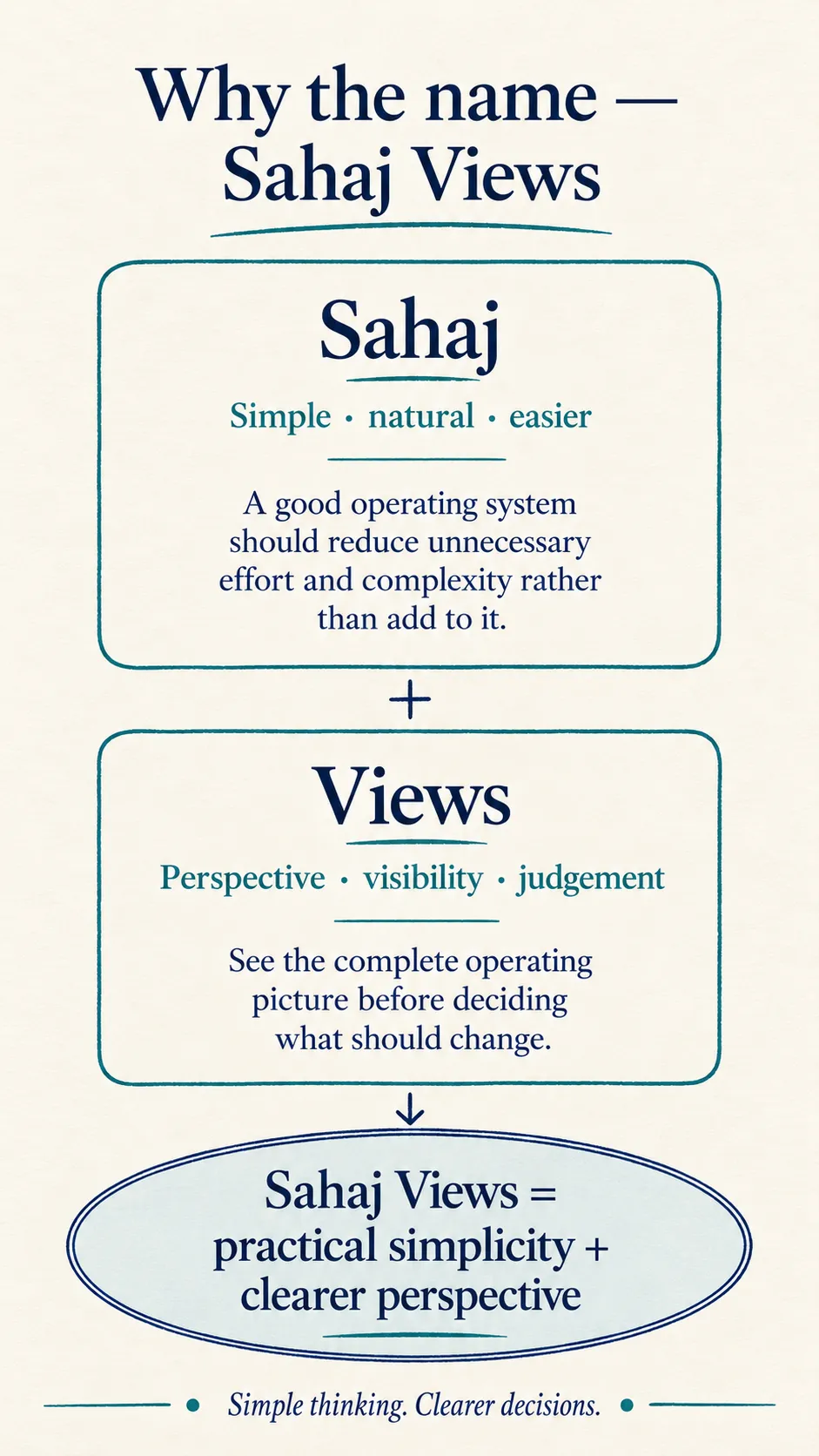
The name reflects the kind of consulting practice we want to build: clear enough to understand, calm enough to trust and practical enough to use.
A reminder that a good operating system should reduce unnecessary effort and complexity rather than add to it.
A reminder to see the complete operating picture before deciding what should change.
We are not attached to a particular product—or to building something new.
The recommendation is driven by the operating need. That makes it possible to retain what already works, simplify what has become difficult, connect suitable systems or build only where a genuine gap remains.
We work across the layer beneath individual products: how the business process, information, people and systems should work together.
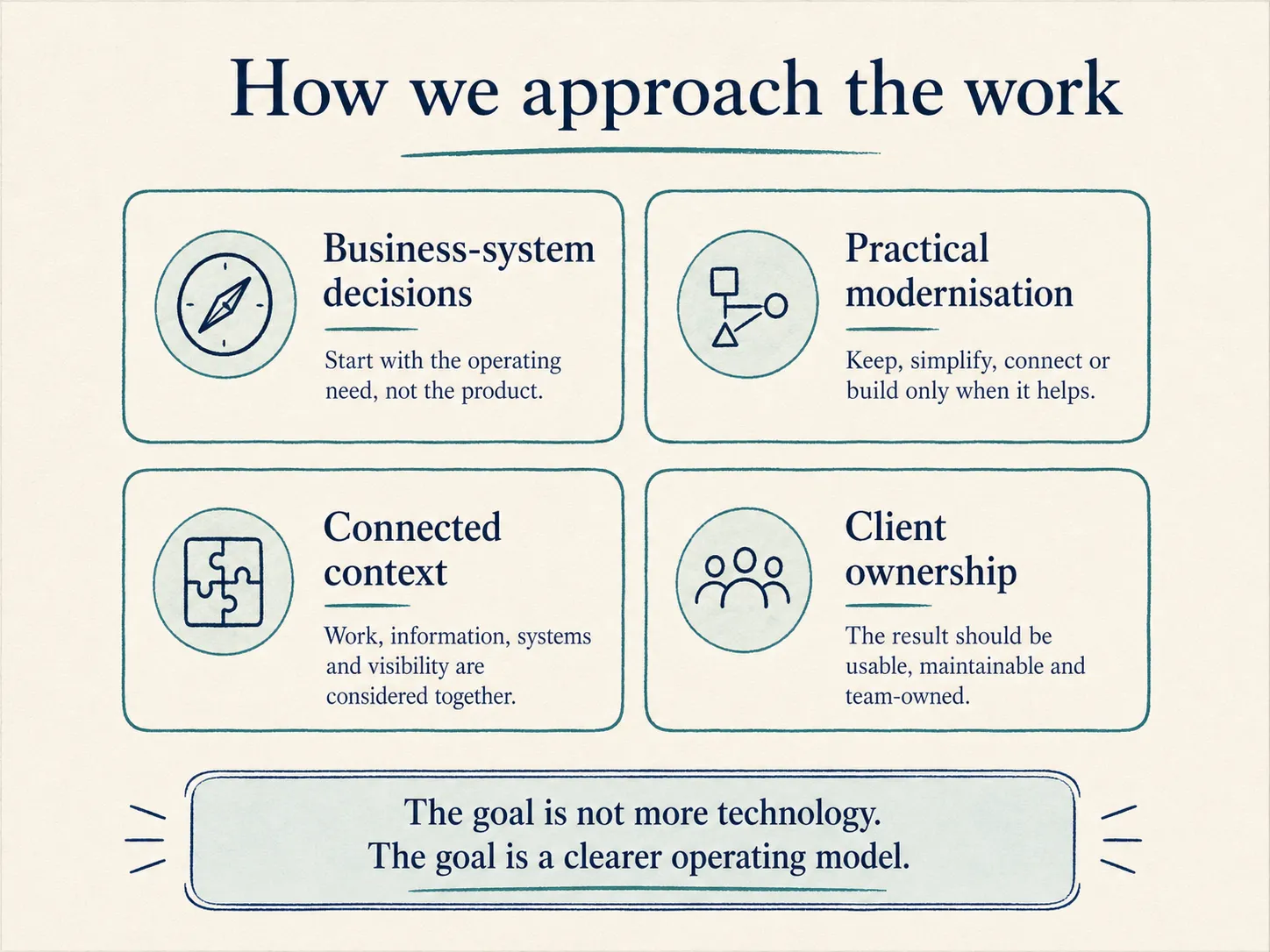
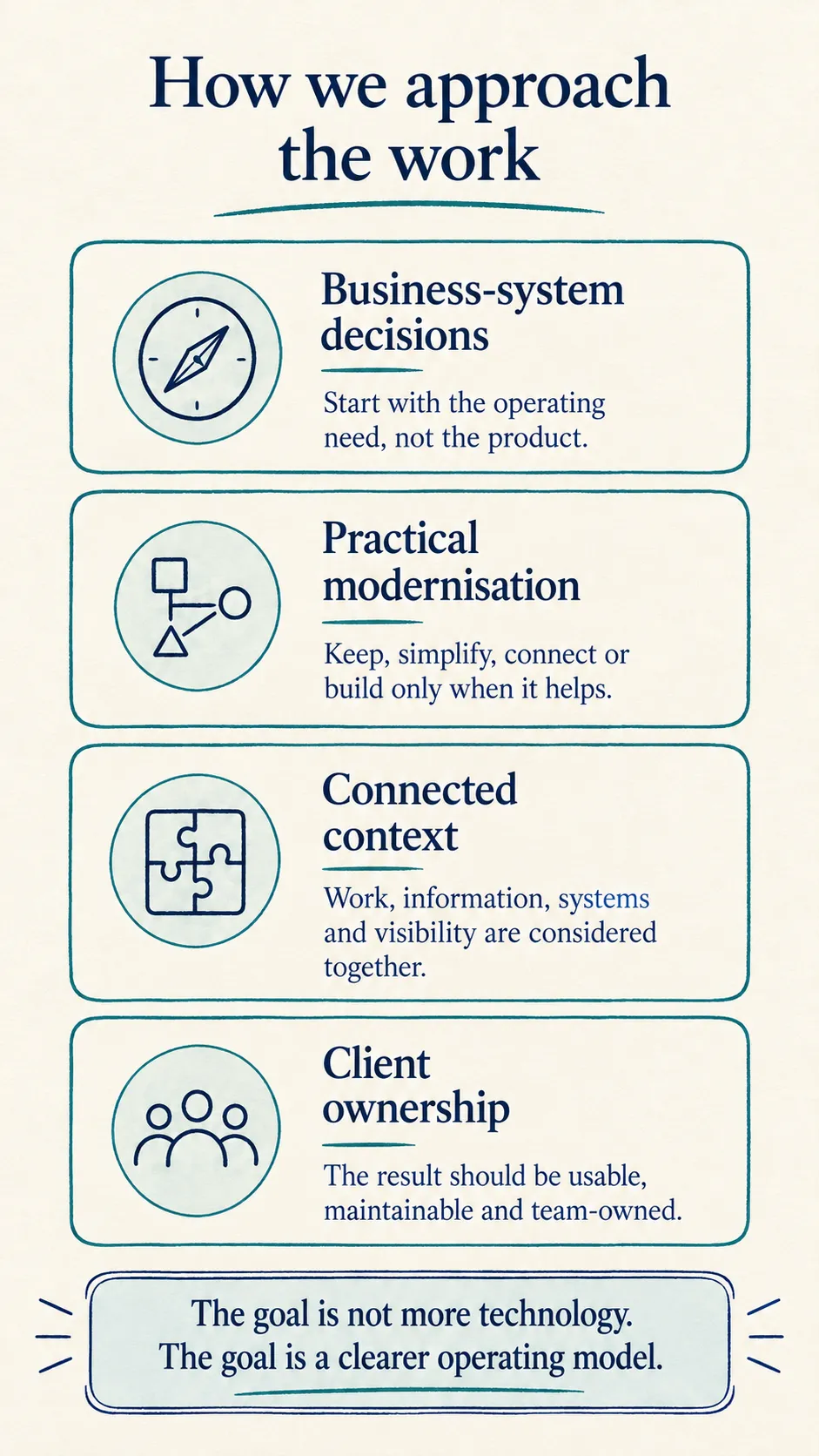
See the Build areasBusiness-system decisions
Clarifying what the operation needs before selecting the technical response.
Practical modernisation
Improving the current environment without assuming everything should be replaced.
Connected context
Keeping the operational reasoning visible from discovery through implementation and review.
Client ownership
Designing the result so the responsible team can understand, operate and maintain it.
A good fit when capable teams have outgrown informal coordination.
The common factor is not one industry or technology stack. It is an operation that needs more structure without becoming more complicated.
We work best with businesses willing to examine how work genuinely happens, what should remain, and where focused change will remove disproportionate effort.
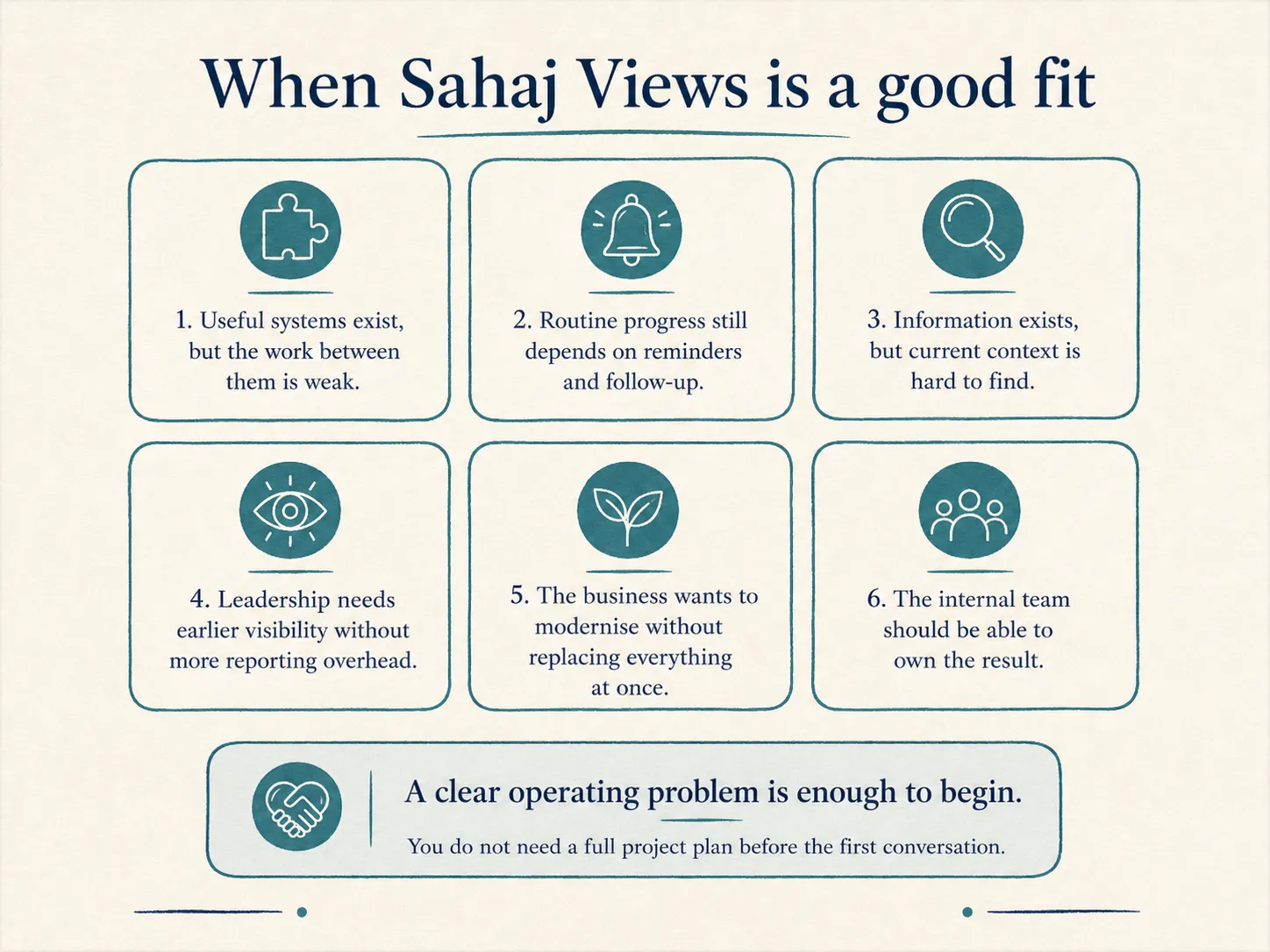
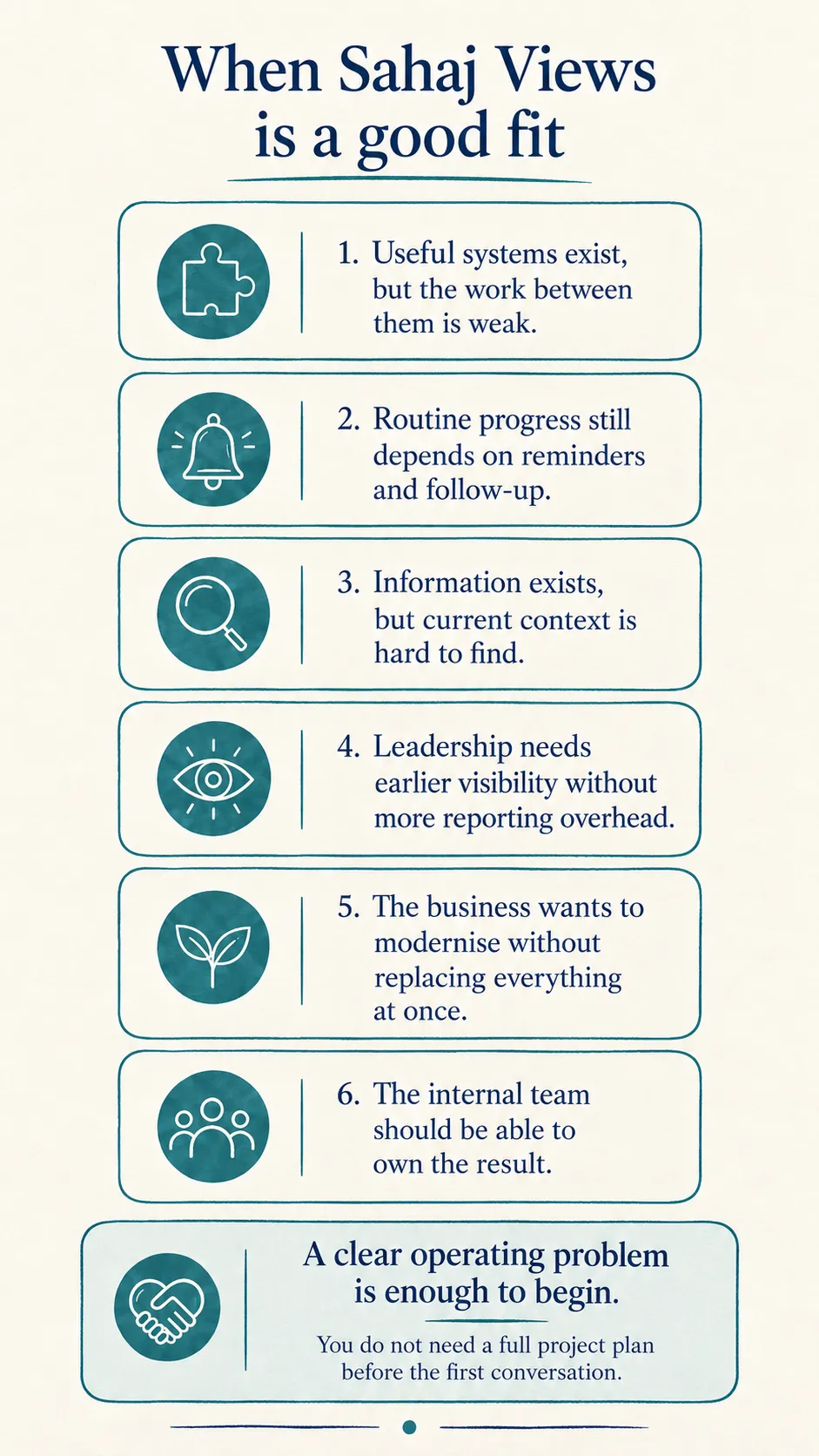
Several useful systems exist, but the work between them is weak.
Routine progress still depends heavily on reminders and personal follow-up.
Information exists, but people struggle to find the current context quickly.
Leadership needs earlier visibility without adding reporting overhead.
The business wants to modernise without replacing everything at once.
The internal team should be able to confidently own the result.