Contact Sahaj Views

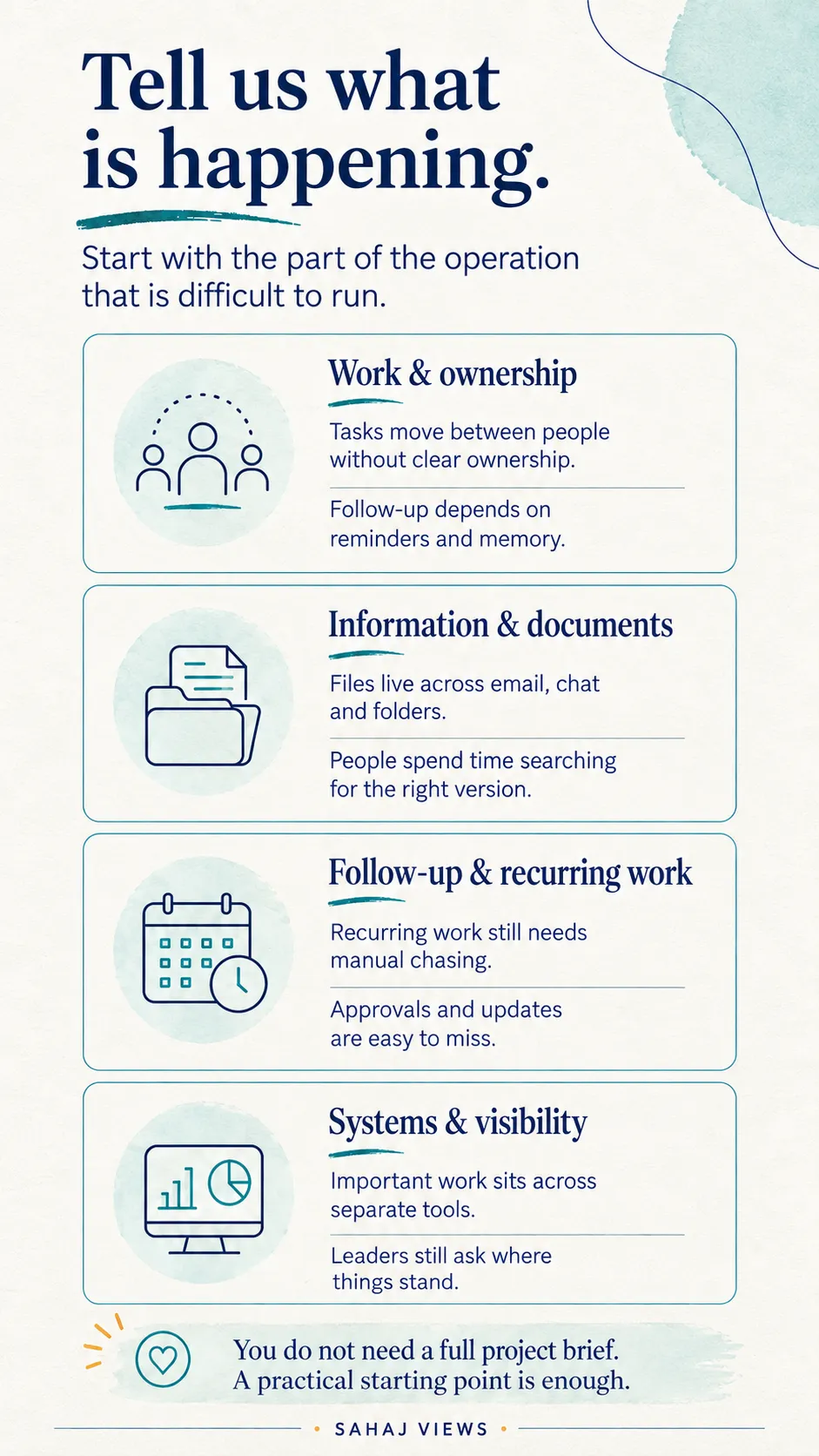
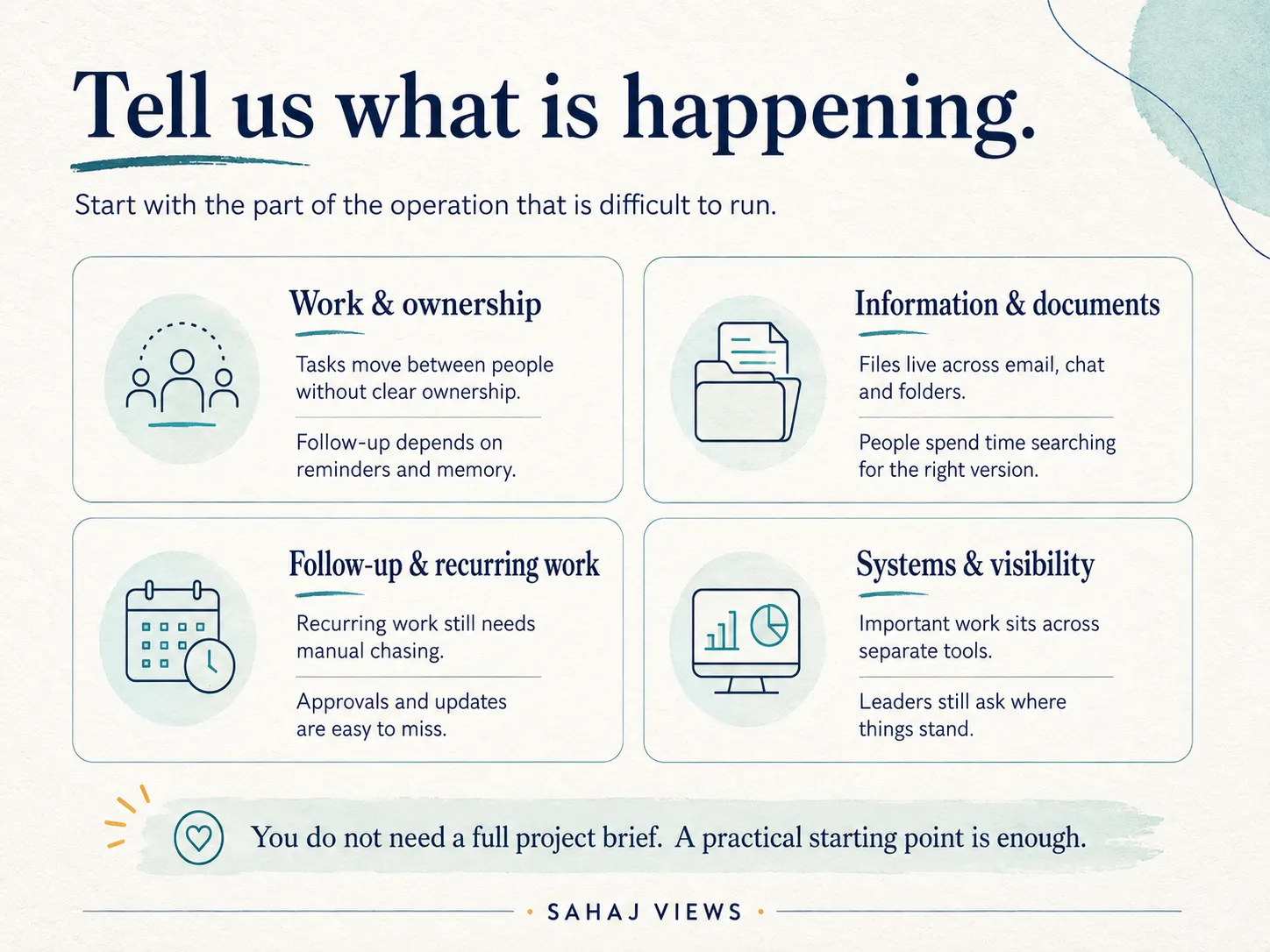
Start with the part of the operation that is difficult to run.

You do not need to select a platform, write a requirements document or arrive with a complete project brief. Tell us what is difficult, delayed, disconnected or unclear. We will start with the operating situation and determine whether there is a sensible next step.

A clear question is enough to begin.
Work & ownership People cannot see what is moving, waiting or owned.
Information Important context is scattered, duplicated or hard to trust.
Follow-up Routine progress depends too heavily on reminders and chasing.
Systems & visibility Applications do not connect cleanly or management sees issues too late.

Tell us what is happening.

A few practical details are enough for the first conversation.


    Please do not include passwords, access keys, sensitive client records or confidential documents in the first message.

    Sahaj Views - Operating Architecture
    Sahaj Views - Operating Architecture
    What helps us understand

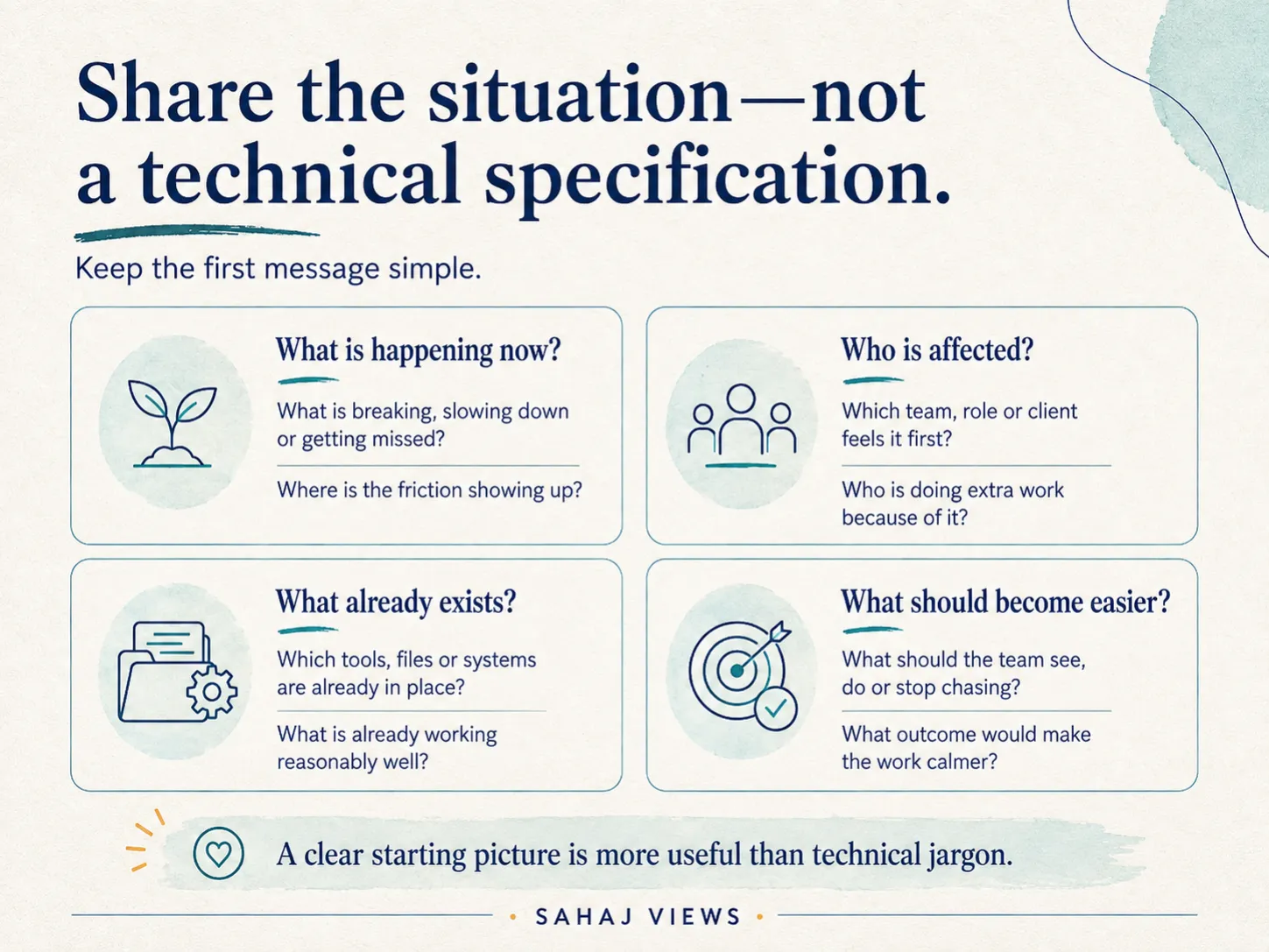
    Share the situation—not a technical specification.

    We get more value from understanding the operating reality than from receiving a long list of requested features at the beginning.

    Keep the first message simple. A paragraph is usually enough. Detailed architecture, process maps and system access can wait until they are genuinely needed.

    Return to the form ↑
    Protect confidential information at this stage.

    General descriptions are enough. Secure access and detailed records should only be shared when they are genuinely required.

    Share the situation diagram
    Share the situation diagram - Mobile
    01

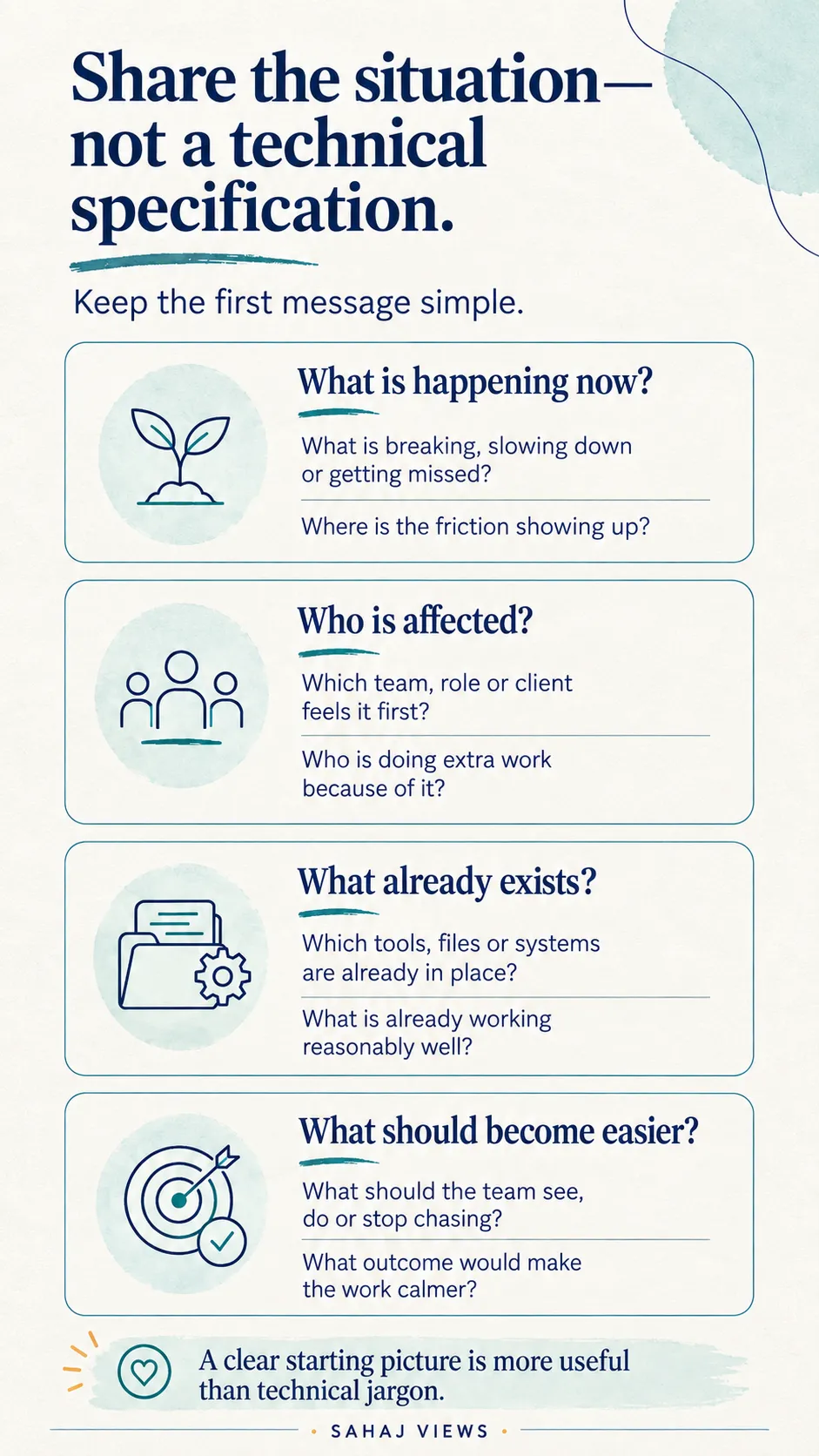
    What is happening now?

    Describe the repeated delay, manual step, missing visibility or disconnected handoff.

    02

    Who is affected?

    Tell us which teams, managers, clients or operating roles experience the problem.

    03

    What already exists?

    Mention the main systems, spreadsheets, workarounds or previous changes that are relevant.

    04

    What should become easier?

    Explain the practical outcome the business needs, even when the technical answer is still unknown.
    What happens next

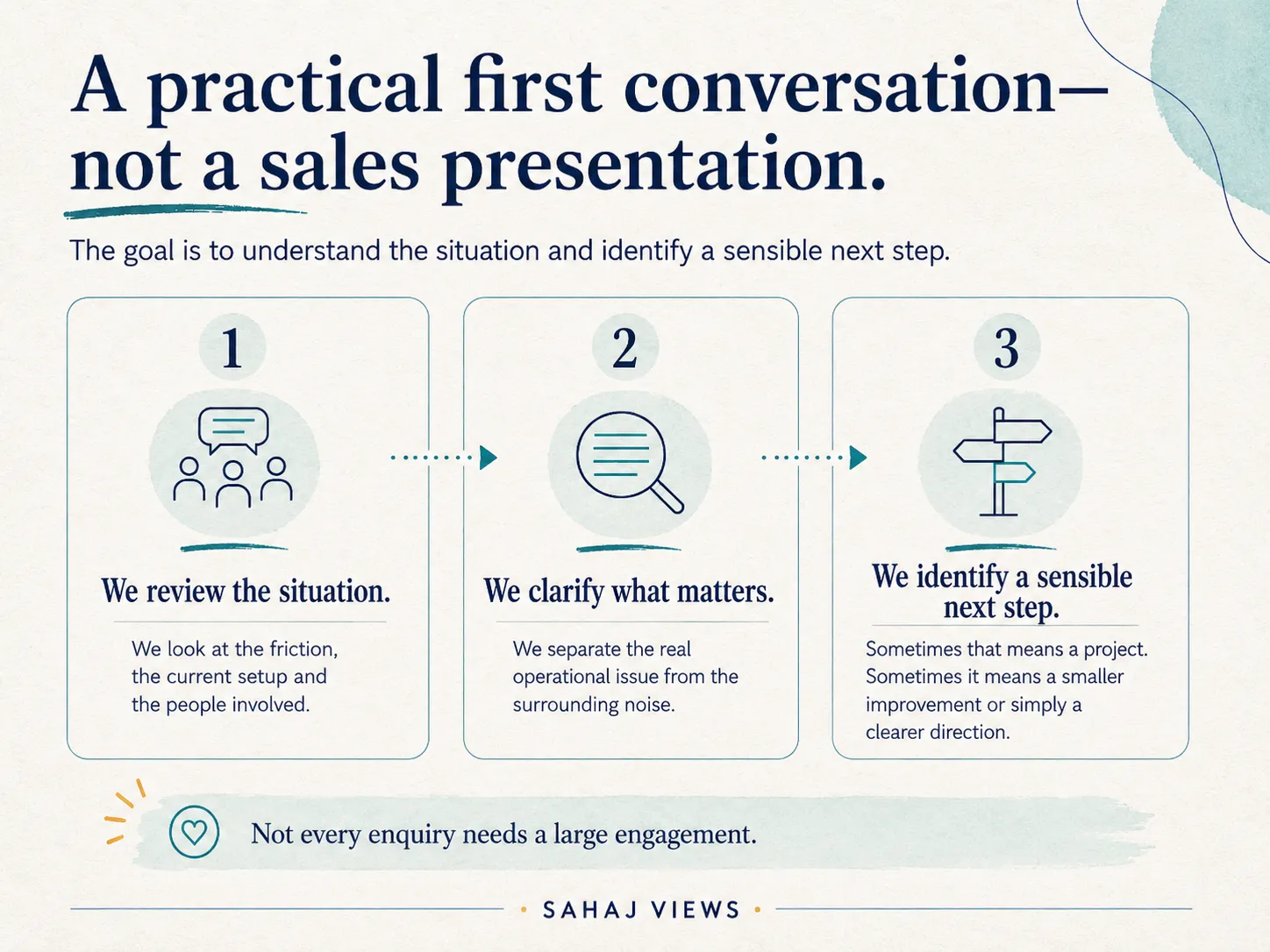
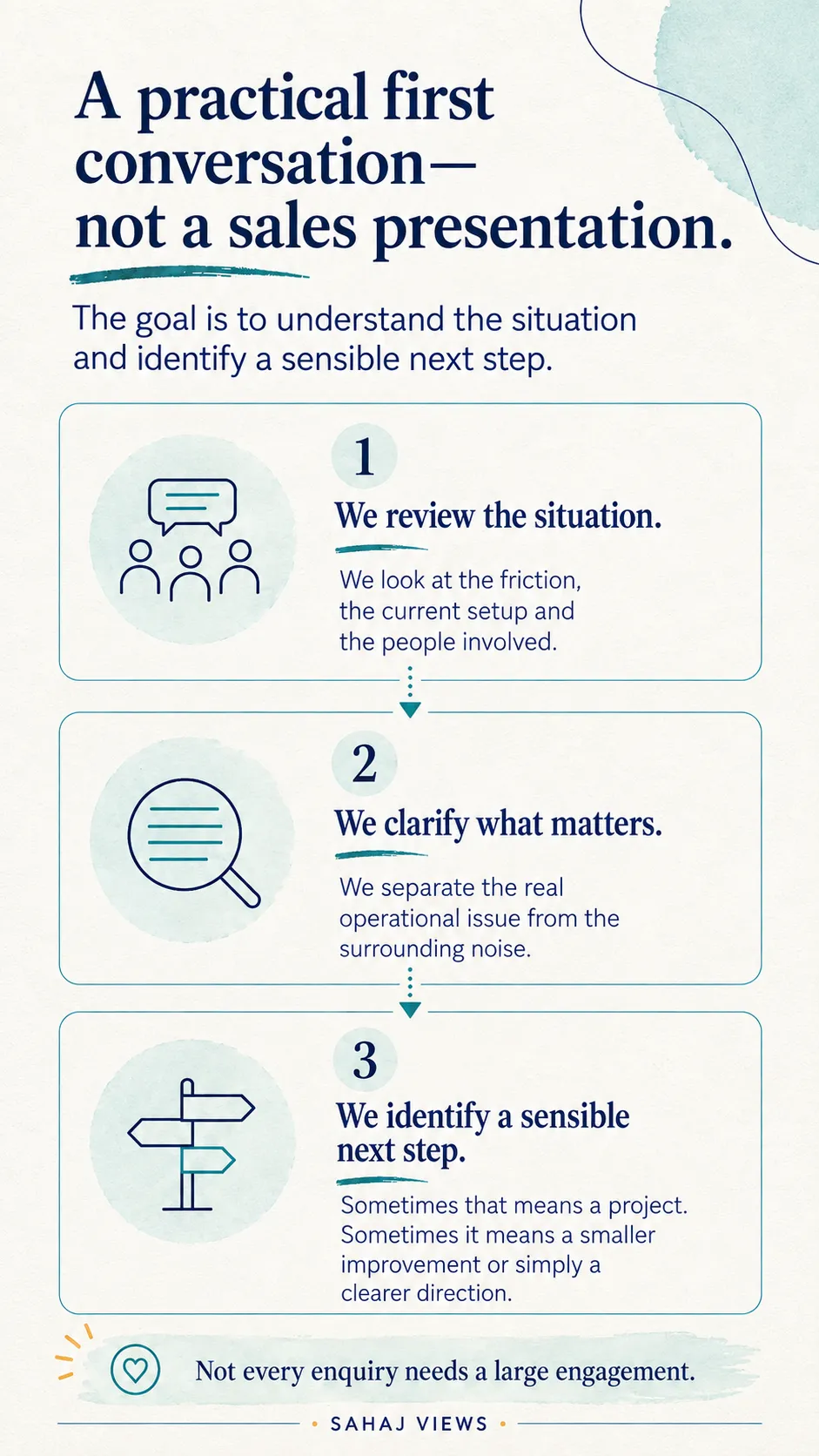
    A practical first conversation—not a sales presentation.

    We use the first exchange to understand the operating situation and decide whether there is a useful next step.

    Not every enquiry needs a project.

    The right next step may be a short clarification, a focused review, a useful resource, a limited first improvement—or no immediate change.

    We do not begin by forcing the problem into a preferred platform or service.
    1

    We review the situation.

    We look at the operating friction, the current setup and the people involved.

    2

    We clarify what matters.

    We separate the real operational issue from the surrounding noise.

    3

    We identify a sensible next step.

    Sometimes that means a project. Sometimes it means a smaller improvement or simply a clearer direction.

    What happens next diagram
    What happens next diagram - Mobile
    Other ways to connect

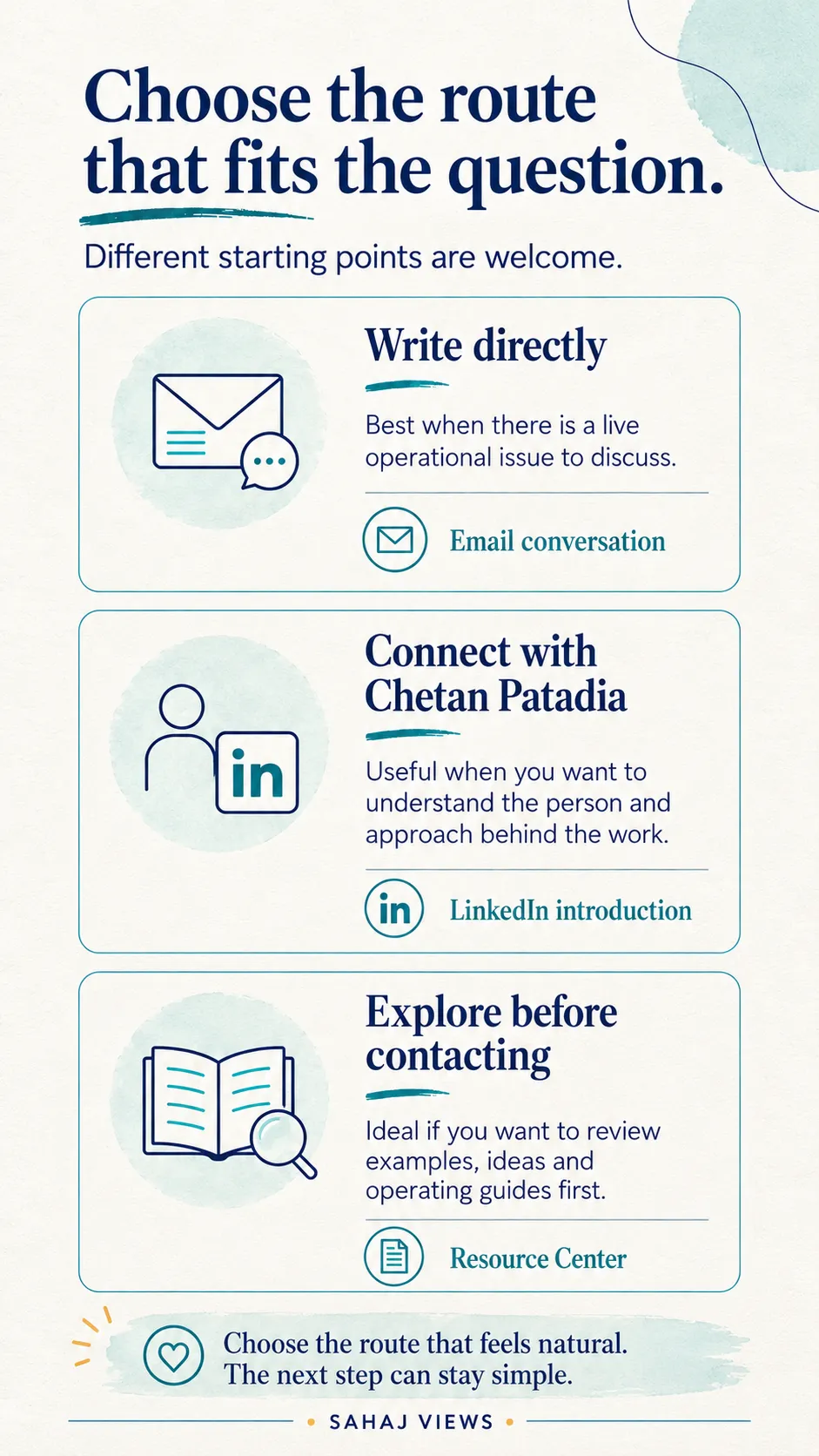
    Choose the route that fits the question.

    The form is the most structured option, but a direct email, LinkedIn connection or relevant resource may be more useful for a simpler starting point.

    Other ways to connect - Mobile
    Other ways to connect
    Email

    Write directly

    Useful when the situation can already be explained concisely or when a small amount of context needs to be included.

    chetan@sahajviews.com →
    LinkedIn

    Connect with Chetan Patadia

    Follow practical notes on business systems, implementation, operating visibility and connected work.

    View LinkedIn profile ↗
    Resources

    Explore before contacting

    Use the Resource Center when the problem is familiar but the right next question or decision is still taking shape.

    Explore resources →
    Founder-led from Ahmedabad, India. Sahaj Views works with businesses and professional teams across locations through focused remote collaboration.
    One real problem is enough

    Begin with what the team experiences every day.

    The first useful step is usually a clearer understanding of the operating problem—not a longer list of technology requirements.

    Scroll to Top