
A clear problem.
A working improvement.
A system the team can run.
We begin with the part of the operation creating effort, delay or uncertainty. We study how the work actually moves, agree the first useful change and make progress visible while the decisions are still flexible.
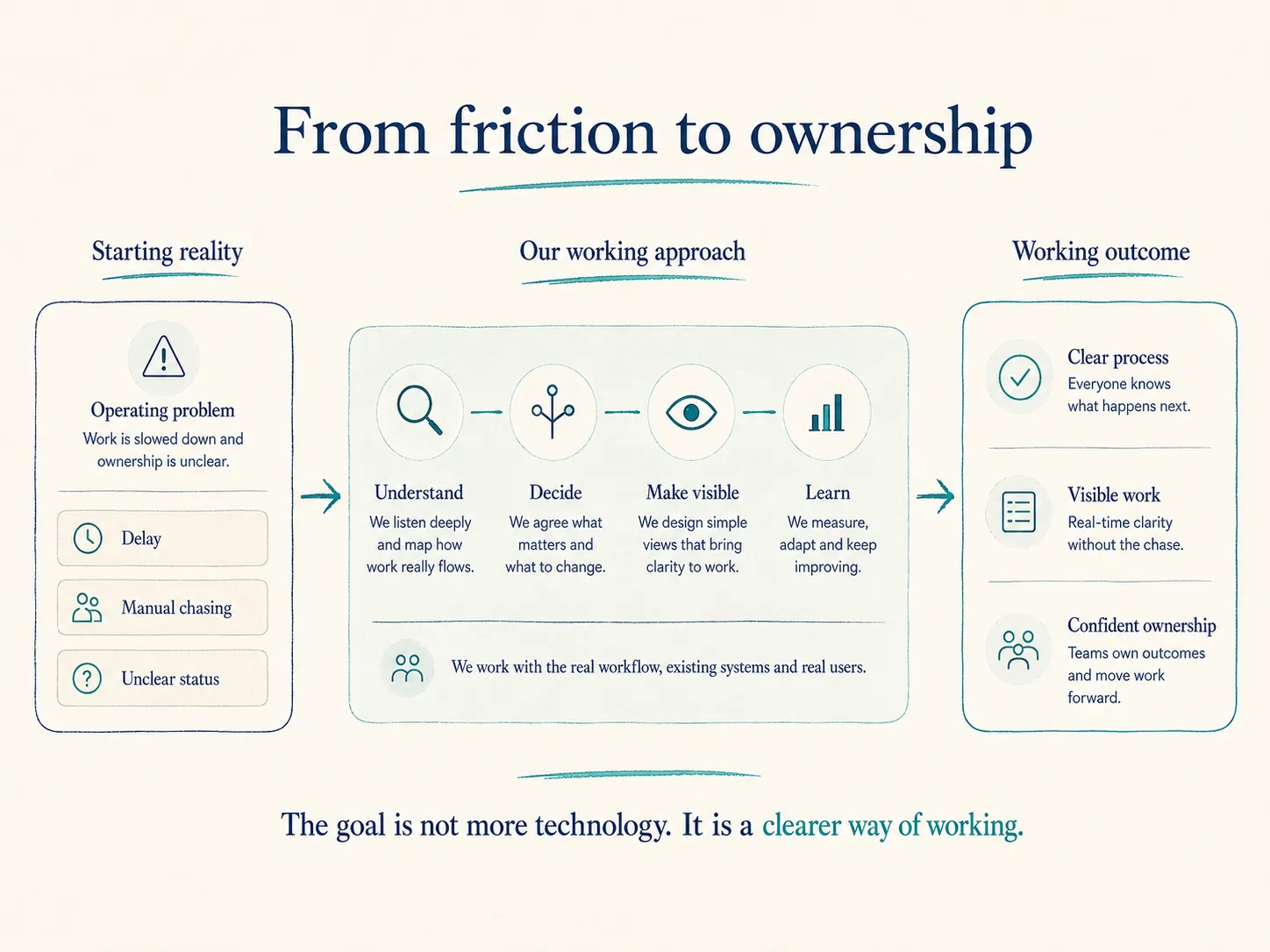
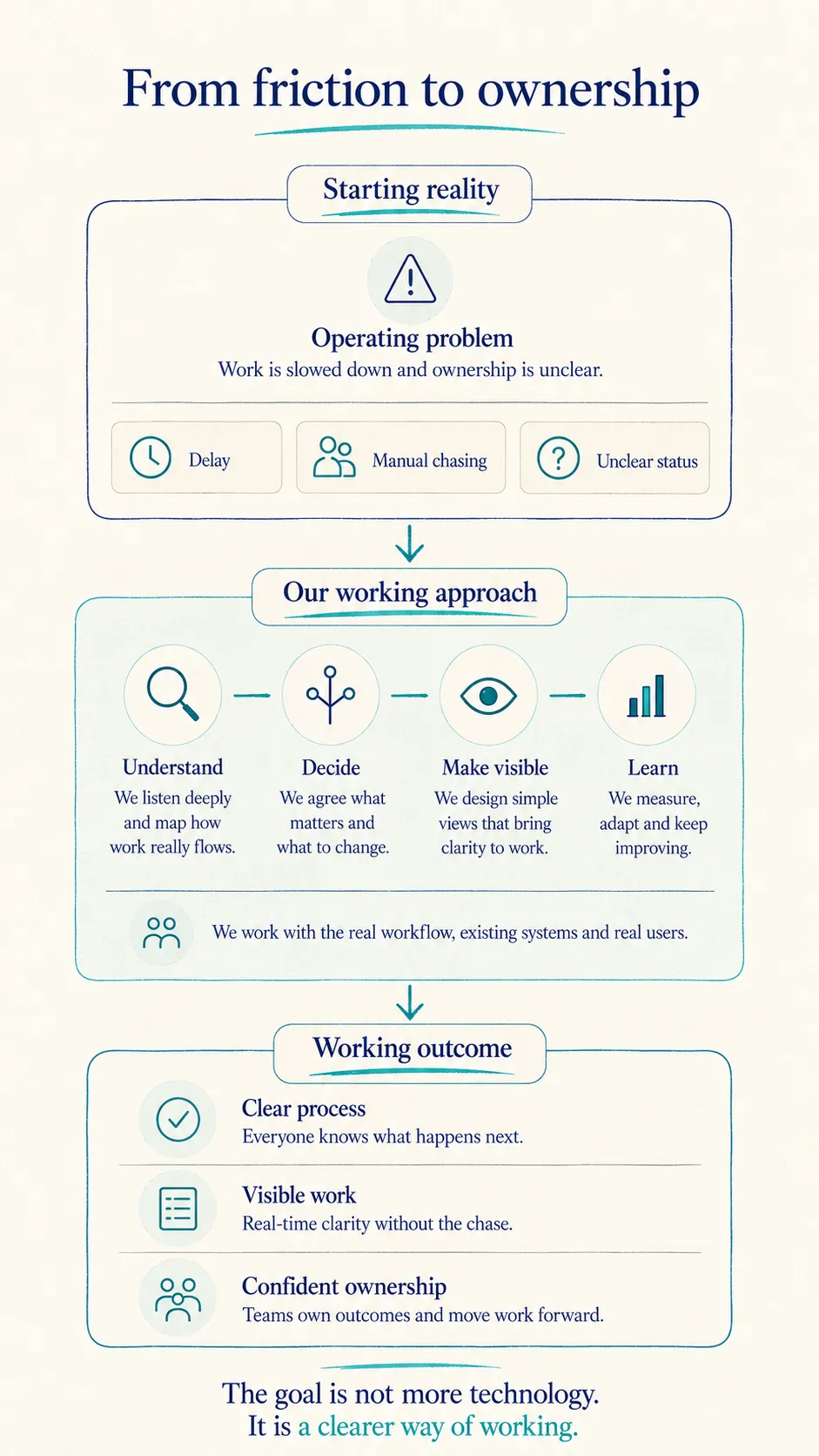
Six practical steps from friction to ownership.
We keep the path clear enough to follow without forcing every engagement into a rigid sequence. Some steps overlap, but the operating problem remains the reference point throughout.
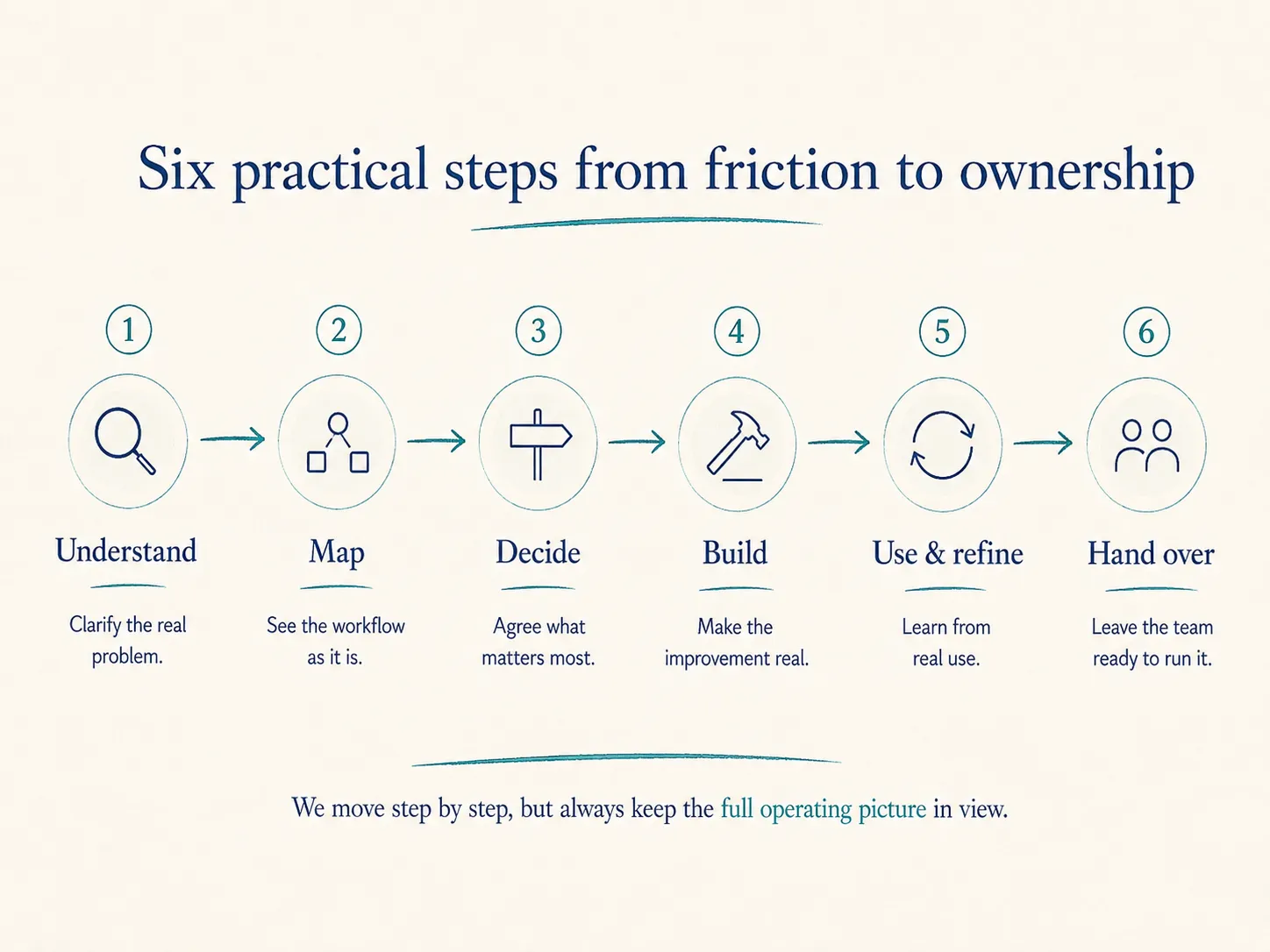
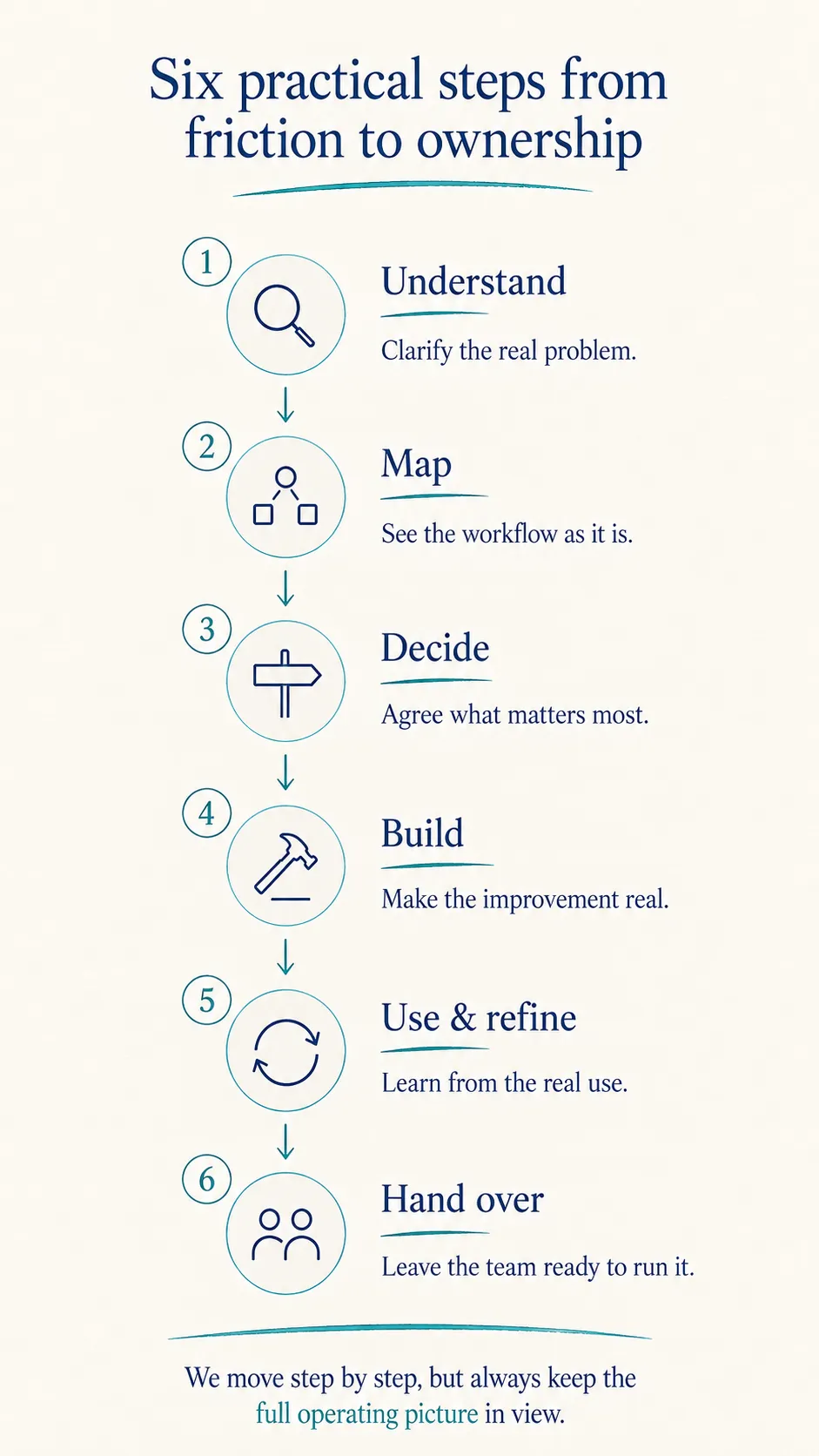
Understand
We identify the operating friction that matters.
We focus on what is delayed, repeated, unclear or too dependent on manual effort.
Map
We follow the real workflow—not the assumed one.
We look at how work, information, ownership and systems move from start to completion, including the exceptions.
Decide
We agree the smallest useful improvement.
We define the boundary, the first practical outcome and what does not need to change yet.
Build
We make the agreed change visible in working form.
The build stays tied to the business need rather than expanding into unnecessary features or technical complexity.
Use & refine
We test with real users, realistic information and meaningful exceptions.
Feedback comes from how the work behaves in practice—not only from whether the ideal path works.
Hand over
We transfer routine control to the client team.
We document the relevant process, train the right people and make known limits and responsibilities clear.
We do not hide the work until the end.
We make working progress visible early enough for useful feedback. The purpose is not to rush delivery; it is to expose assumptions, process gaps and practical constraints while they are still easier to change.
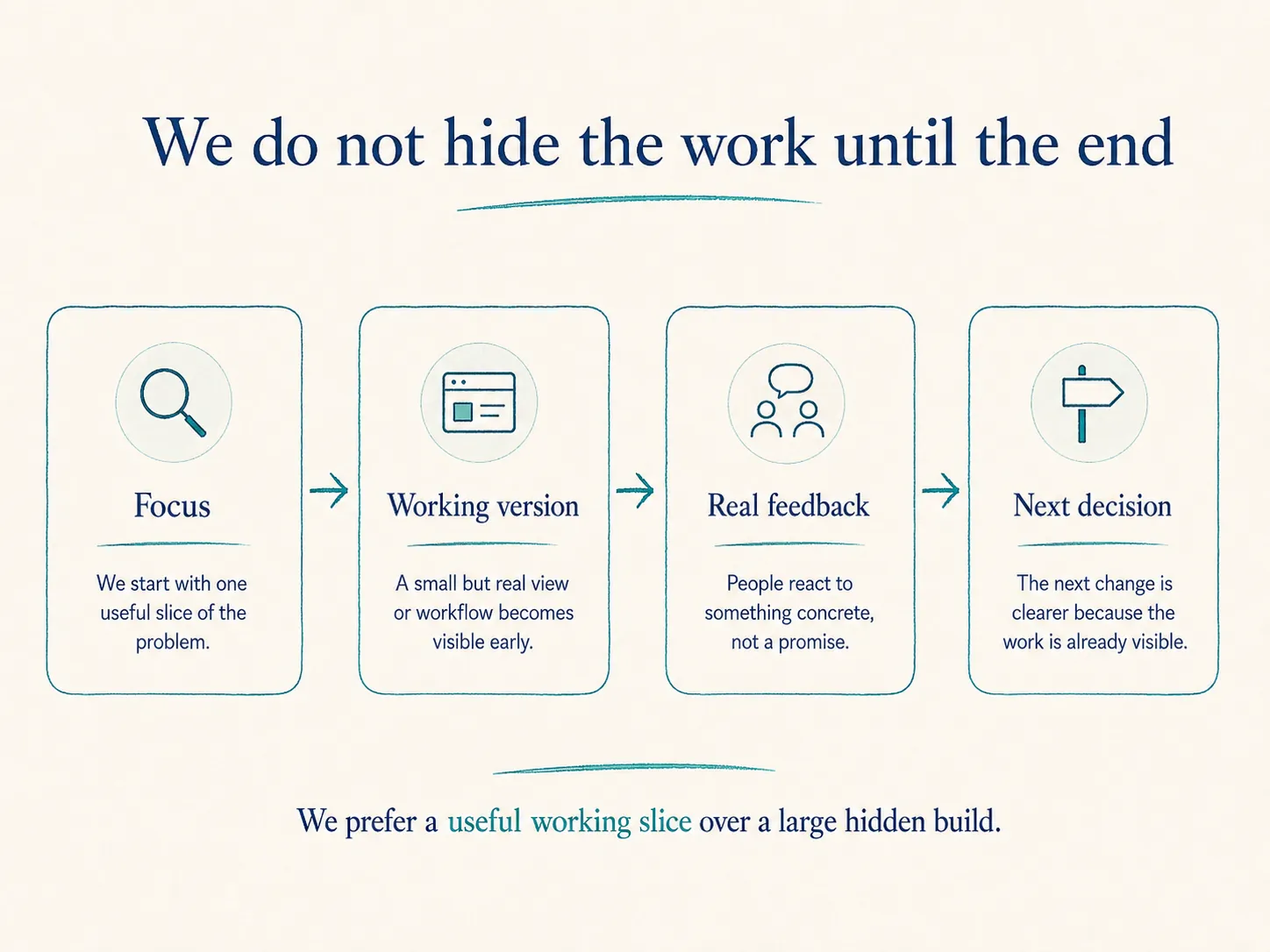
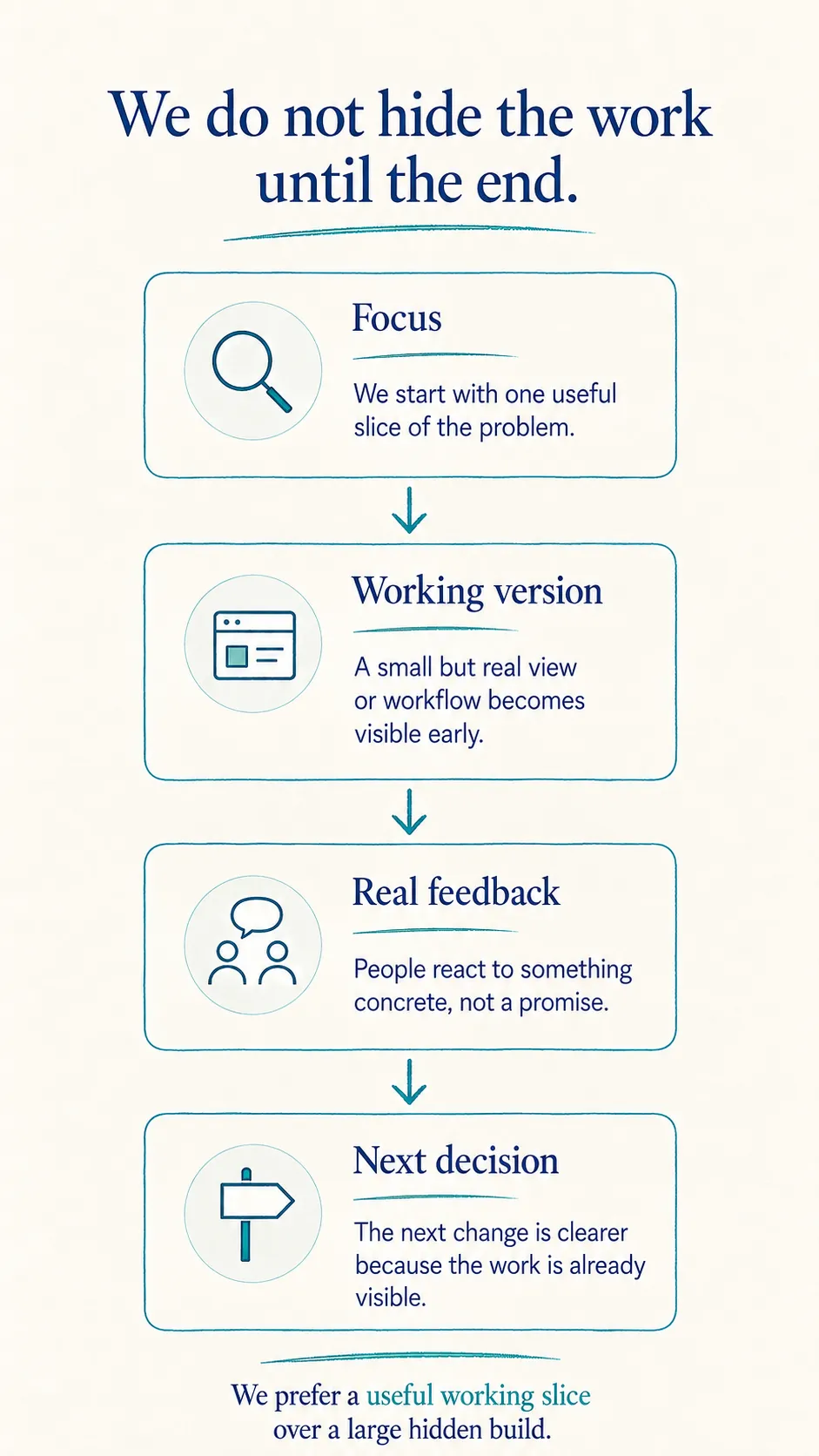
Focus
We select one clear friction, the people affected and the condition that would make the first improvement useful.
Working version
We create the smallest usable change that moves the conversation from ideas to something concrete.
Real feedback
We test the flow with real users and realistic exceptions—not only the ideal happy path.
Next decision
We refine, extend, pause or move to the next priority based on what the working version has shown.
We improve the current environment before adding to it.
Another platform is not automatically an improvement. We first decide whether the current operation needs less complexity, a better connection or a genuinely new capability.
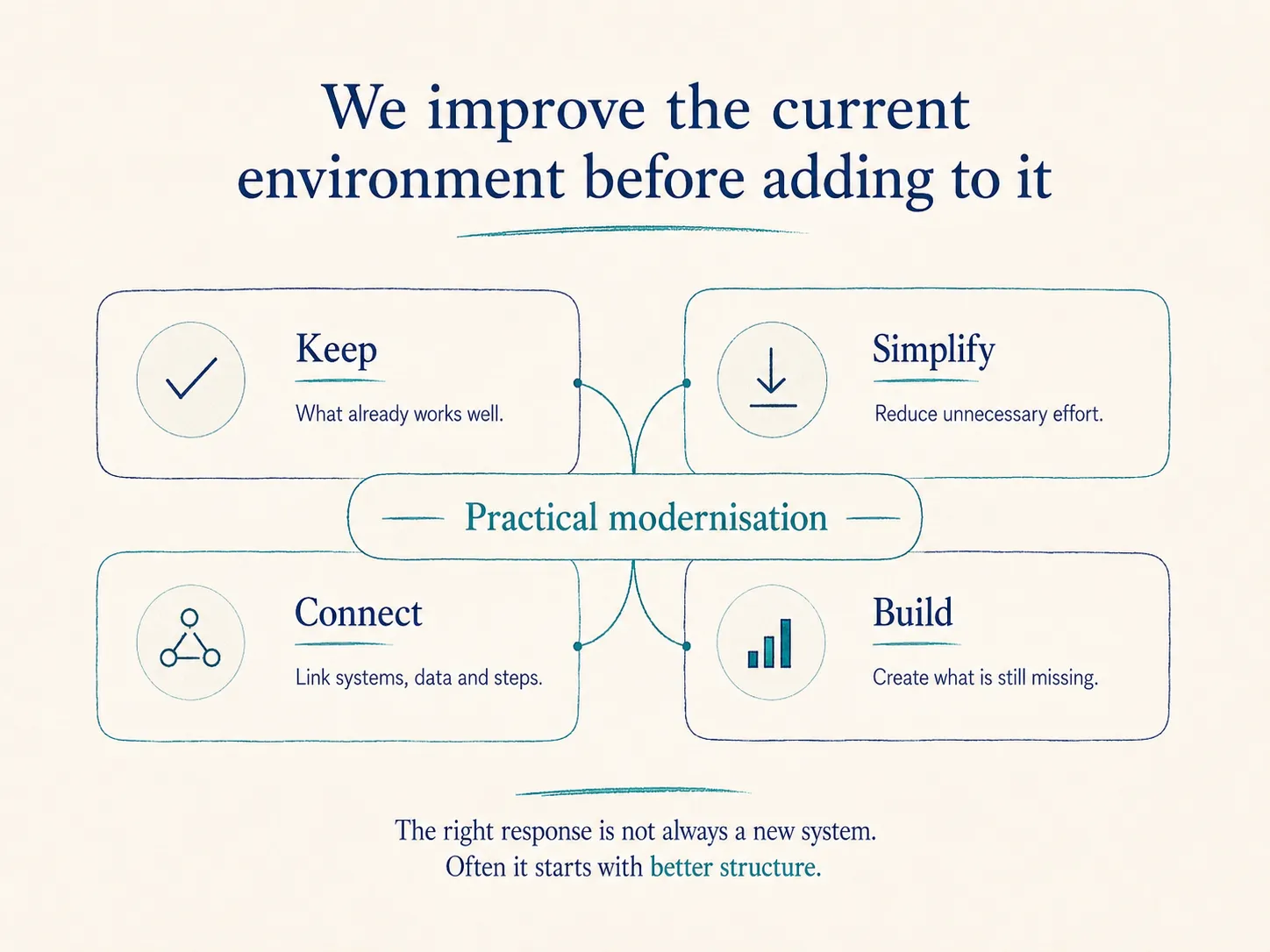
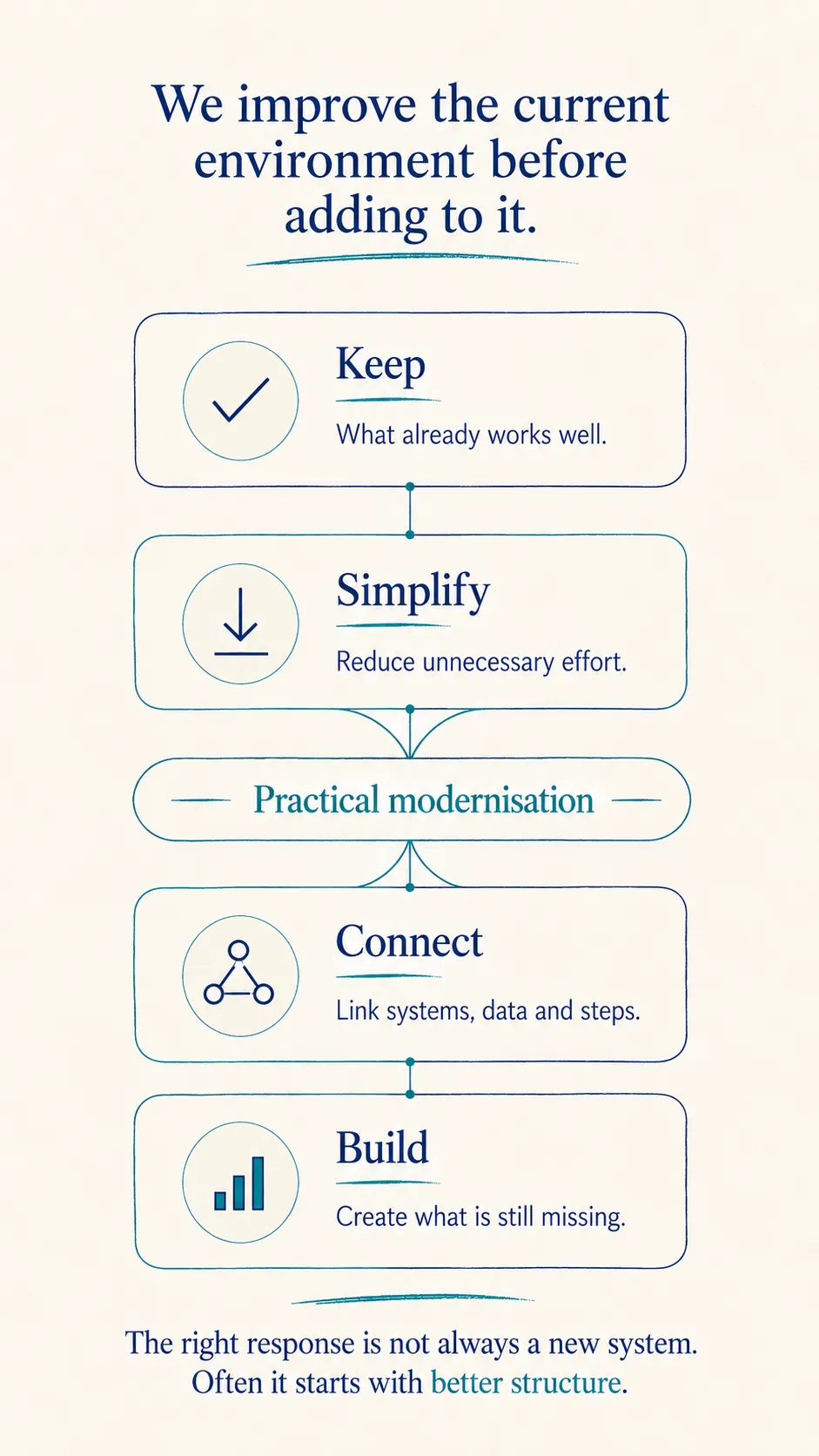
Keep
Retain what already performs its role reliably.
Simplify
Remove unnecessary steps, duplicate records and unclear responsibility.
Connect
Create the missing flow between useful people, information or systems.
Build
Introduce something new only where a real capability gap remains.
We clarify the workflow and outcome before choosing the technical response.
Complexity must justify its long-term cost, risk and ownership.
We do not automate confusion or expand an unstable process.
The system must remain understandable and usable in daily work.
We build for ownership, not dependency.
A functioning system is only part of the result. The main workflow, routine administration, user responsibilities, known limits and exceptions should also be understandable.
Continued support may still be useful, but it should be an agreed service—not dependency created by unnecessary complexity.
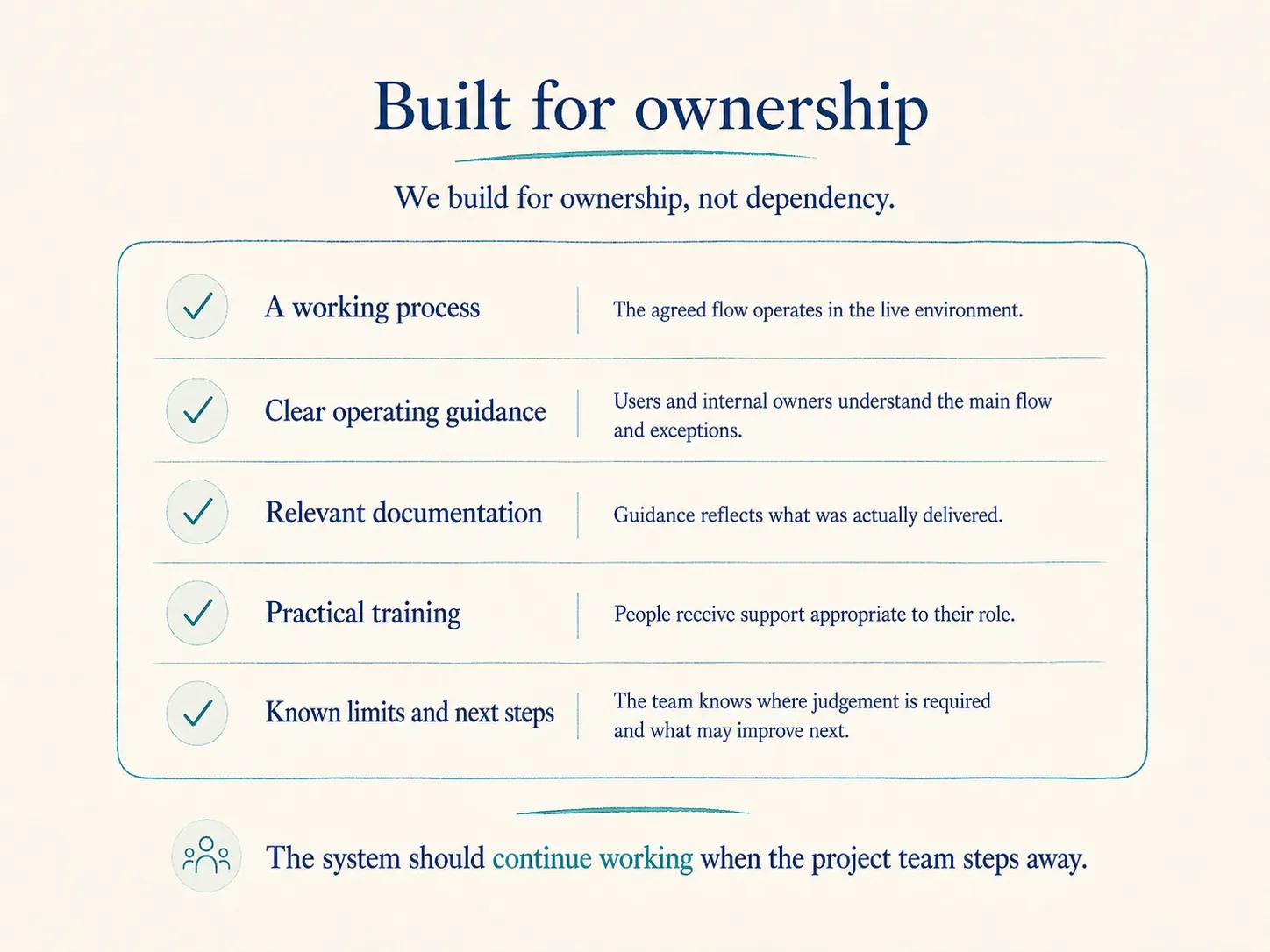
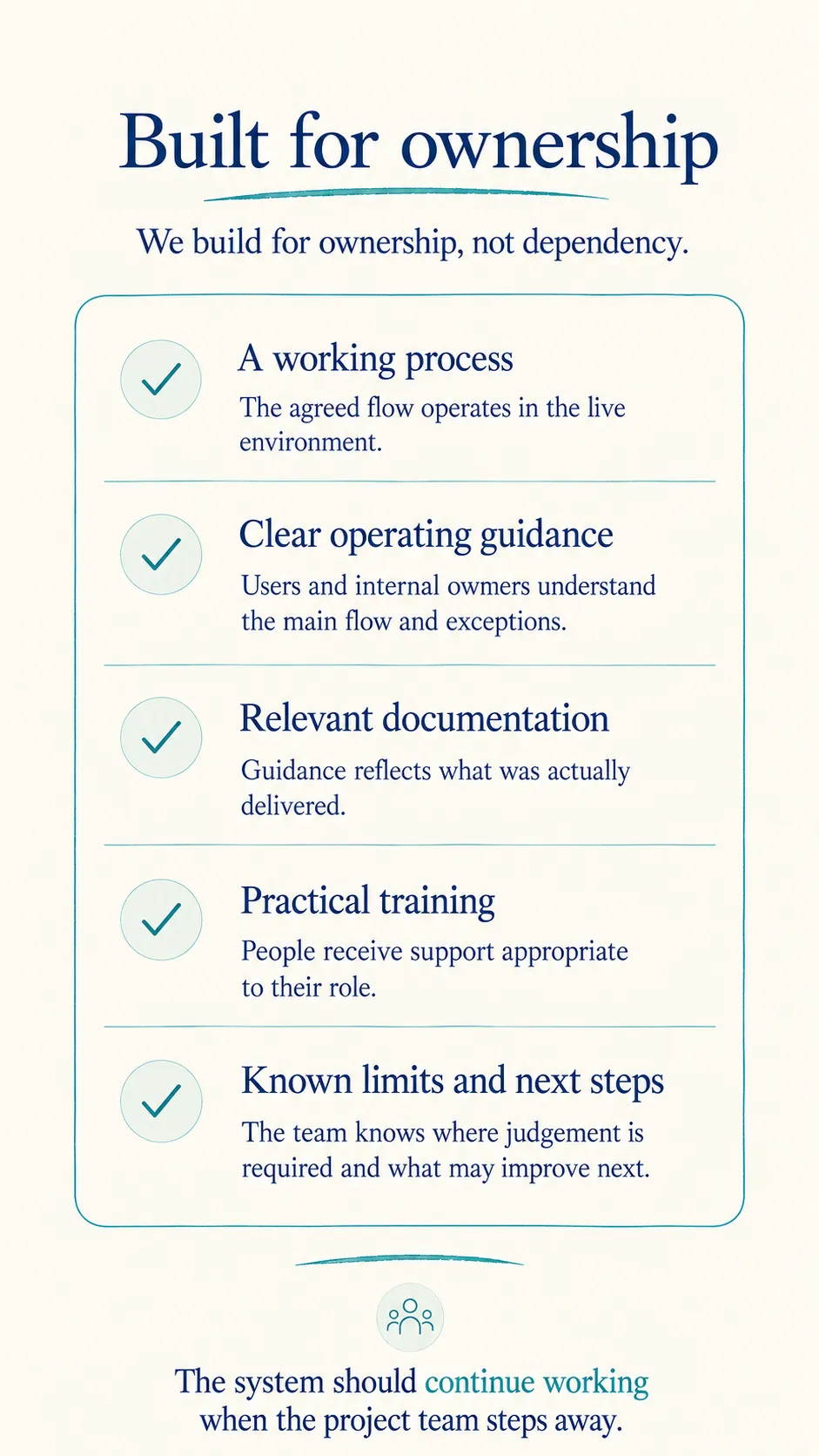
A working process
The agreed flow operates in the live environment.
Clear operating guidance
Users and internal owners understand the main flow and exceptions.
Relevant documentation
The guidance reflects what was actually delivered.
Practical training
People receive guidance appropriate to their role.
Known limits and next steps
The team knows where judgement is required and what may improve next.