
We start with what keeps getting in the way—not with a software category.
Repeated chasing, scattered information, unclear ownership, disconnected systems and late visibility are usually symptoms of how work moves between people, information and tools. We use those symptoms to understand where the operating structure needs to improve.
A recurring operating problem is enough to begin the conversation.
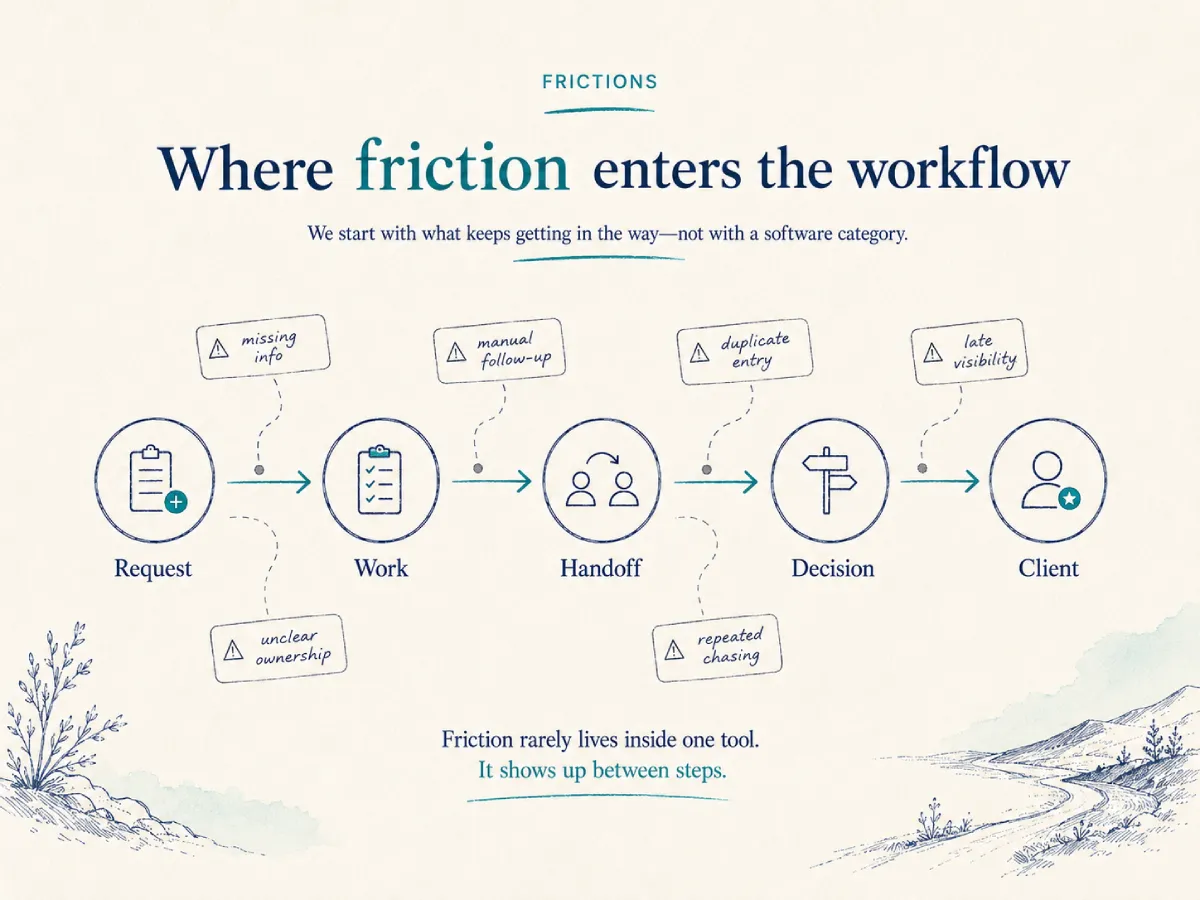
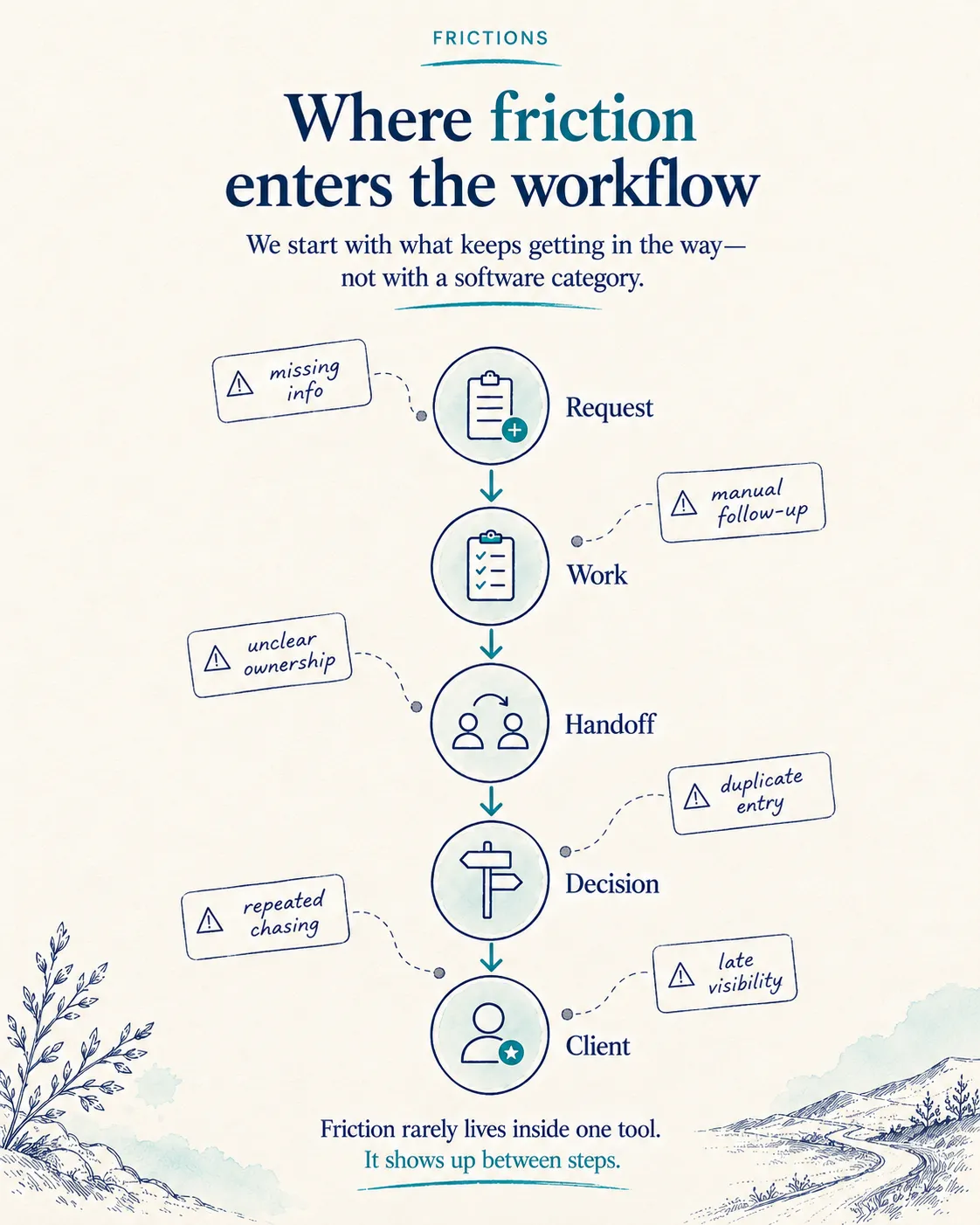
Six friction patterns we look for across the operation.
The labels are deliberately simple. Each pattern can show up differently by industry, but the underlying operating problem is often familiar.
Work depends on follow-up
Things move because somebody remembers to check, remind or chase.
Explore the patternInformation is scattered
The answer exists, but people search several places to rebuild the full picture.
Explore the patternSystems do not connect
Useful tools still create extra work when people carry information between them.
Explore the patternOwnership becomes unclear
A handoff happens, but the next owner or next action is not always obvious.
Explore the patternVisibility arrives late
The operating picture is assembled after the work has already moved.
Explore the patternClients need repeated chasing
Requests, documents and updates depend on repeated emails, messages or calls.
Explore the patternWork depends on follow-up.
Human judgement remains essential. The friction is that routine coordination keeps consuming attention simply to move normal work forward.
We reduce the routine reminders, checks and handoffs that can be handled through clearer triggers, visible exceptions and structured follow-up.
Staff repeatedly remind clients or colleagues
The same pending action is followed up through calls, messages and emails.
Approvals wait unnoticed
The next person may not know that something is ready for review until somebody contacts them.
Missing information is tracked manually
Staff maintain lists of what has been requested, received and remains outstanding.
Routine steps need repeated checking
Someone verifies whether a notification, record or next action was completed.
See two more signs
The same messages are recreated
Standard reminders, confirmations and status messages are repeatedly prepared by hand.
The process slows when the coordinator is unavailable
One person holds the reminder schedule and knows who needs to be contacted next.
The process may lack clear triggers, structured reminders, escalation rules, recurring-work logic or visible exceptions.
Information is scattered.
Files, records, decisions and working knowledge may all exist, but not in a structure that makes the complete operating context easy to find and trust.
We organise information around the work it supports so the team can find, trust and use it without relying on individual memory.
Information is spread across too many places
Files and records sit across inboxes, personal folders, shared drives and business applications.
Nobody is certain which version is current
People compare files, check dates or ask the person who last worked on the document.
Finding information depends on memory
Search works only when someone knows the filename, folder or person who created it.
Information is not organised around the work
Documents cannot easily be viewed by client, project, service, period, owner or status.
See two more signs
Access is inconsistent
Some people cannot reach what they need, while others can see information outside their role.
Knowledge depends on particular employees
When an experienced person is unavailable, the history or correct process becomes difficult to find.
The information may lack a shared structure, clear ownership, consistent organisation or a dependable connection to the work it supports.
Systems do not connect.
Several applications may remain entirely appropriate. The friction appears when important information and actions do not move cleanly between them.
We connect the handoffs that matter while keeping useful systems in place wherever they continue to serve the business well.
The same information is entered more than once
Client, project, order, product or financial details are retyped in several applications.
Different teams work from different records
Sales, delivery, operations and finance may each hold a different version of the same information.
Data is exported, corrected and imported
Spreadsheets move information between systems that do not communicate reliably.
One person acts as the bridge between applications
The process depends on someone knowing where information must be copied next.
See two more signs
A change does not reliably start the next step
A sale, approval, completed job or payment does not update the related process.
Handoff errors are difficult to trace
The team cannot easily see what moved, what failed or which record needs attention.
The operation may have duplicated records, missing connections, unclear system ownership or no dependable way to see failed handoffs.
Ownership becomes unclear.
Work may be recorded somewhere, but responsibility, the next step and the current status are not always dependable once the work moves between people or teams.
We make work, ownership and next actions visible enough that handoffs do not depend on status meetings, memory or individual trackers.
Managers repeatedly ask for updates
Status is gathered through messages, meetings and individual follow-up.
Ownership becomes unclear after a handoff
Everyone knows who began the work, but responsibility for the next step is uncertain.
Deadlines live in personal systems
Important dates are maintained in individual calendars, inboxes, spreadsheets or memory.
Workload appears only when somebody is overwhelmed
The team cannot see where work is building until delivery starts to suffer.
See two more signs
Recurring work is recreated manually
Weekly, monthly, quarterly or annual responsibilities are copied into new trackers or created again by hand.
An employee’s absence creates a status gap
The team cannot easily understand their open work, commitments or next actions.
The work may lack shared stages, clear responsibility, visible workload or a reliable connection to its related information.
Visibility arrives late.
The issue is not simply the absence of a dashboard. The deeper question is whether dependable information is available while there is still time to act.
We create clearer operating views from the work and data already being generated so delays, workload and exceptions become visible earlier.
Reports require manual spreadsheet consolidation
Information is exported from several sources and rebuilt before management can review it.
The report is already outdated when it arrives
The underlying operation has changed by the time the information is prepared.
Different reports show different numbers
Teams spend time deciding which figure is correct before discussing what it means.
Managers depend on meetings to understand the operation
Leadership cannot see progress, workload or delay without asking people to explain it.
See two more signs
A summary cannot be traced back to the work
Managers see a number but cannot identify the clients, orders, services, projects or tasks behind it.
Problems become visible only after an impact
A deadline, complaint, shortage or delivery failure is the first clear warning.
The business may be working with inconsistent data, disconnected sources, manual reporting or no clear view of the exceptions that need attention.
Clients need repeated chasing.
The client experience is shaped by the operating process behind the interaction—not only by a form, website or portal.
We clarify intake, pending items, handoffs and status so both the client and the internal team spend less time asking what happens next.
Clients are asked for the same information more than once
Different people or departments request information the client has already provided.
Requests and documents move through scattered communication
Important information arrives through email threads, messages, forms and file-sharing links.
Clients are unsure what remains pending
They cannot easily see what has been requested, received or still requires action.
The experience changes depending on who manages it
Onboarding, updates and follow-up are inconsistent across employees or teams.
See two more signs
Status updates require internal chasing
The client-facing person must contact several colleagues before answering a simple progress question.
Internal handoffs are slow
Sales, onboarding, delivery and finance do not pass information cleanly to the next team.
The client journey may have weak intake, unclear handoffs, separated information or no shared view of progress.
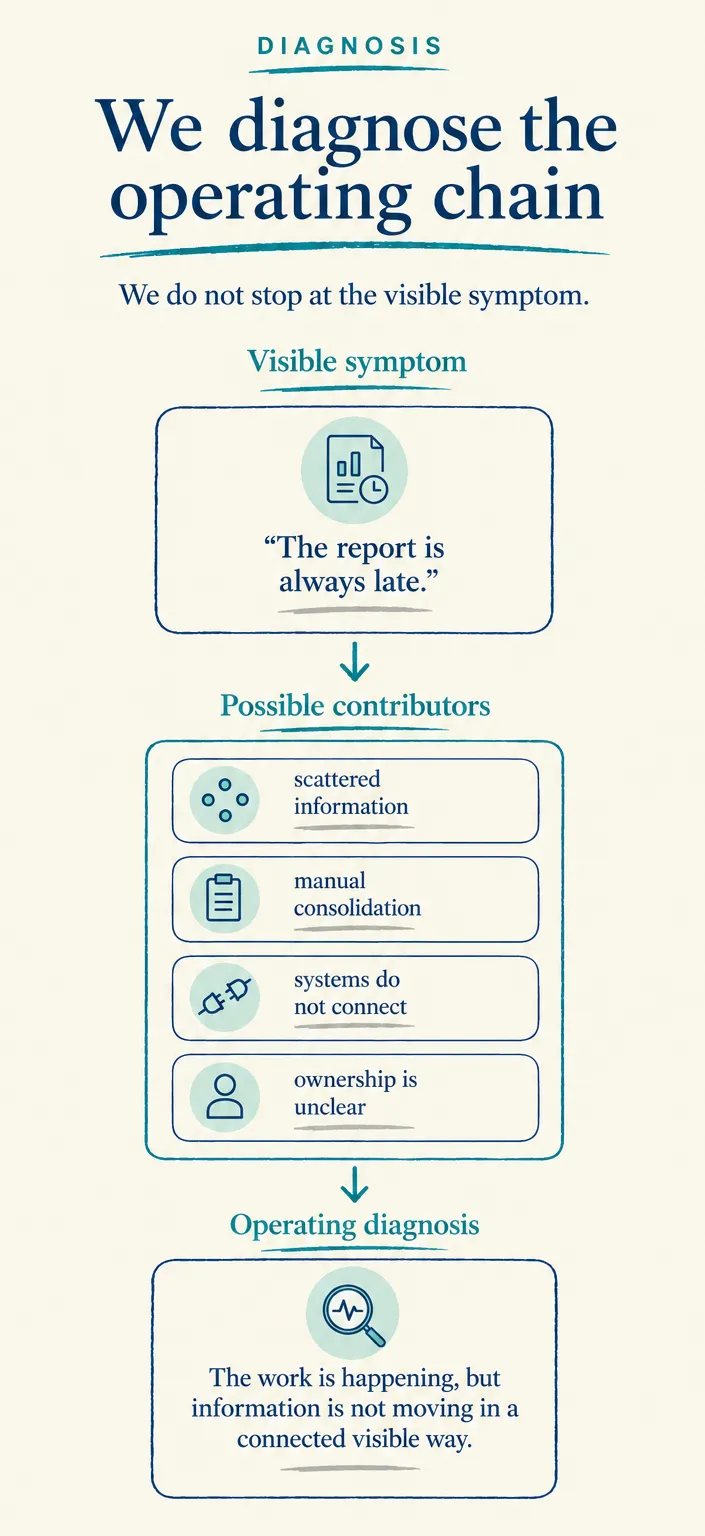
We diagnose the operating chain—not the symptom in isolation.
A late report may appear to be a reporting problem. It may actually begin with inconsistent work updates, unclear ownership, scattered information or a system handoff that never reaches the reporting source.
The same applies to delayed work, repeated follow-up and client complaints. We first understand how work, information and responsibility move before deciding what should change.
See our approach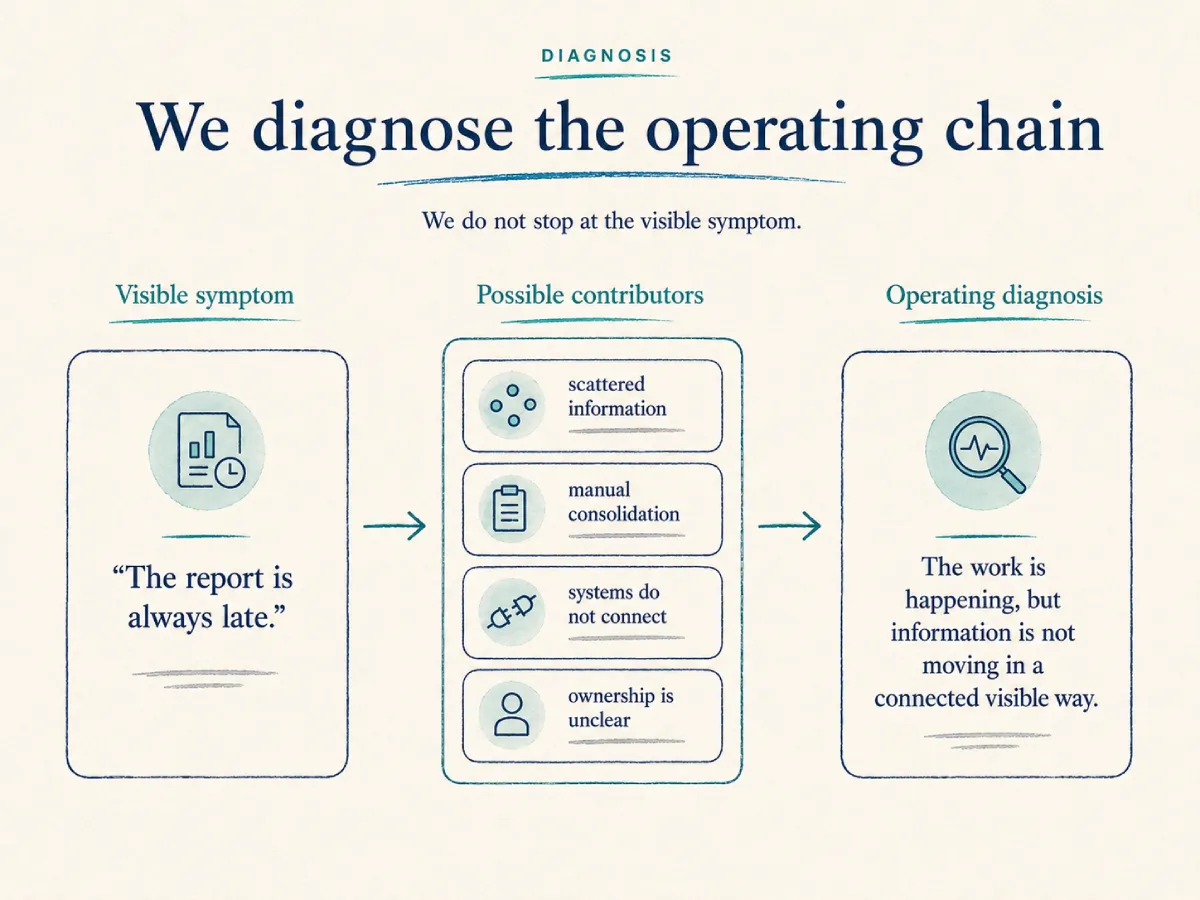
Recognition is useful when it leads to a clearer next step.
We use the next page to help move from recognition to action: understanding the capability, seeing proof, or seeing how Sahaj Views works through the problem.
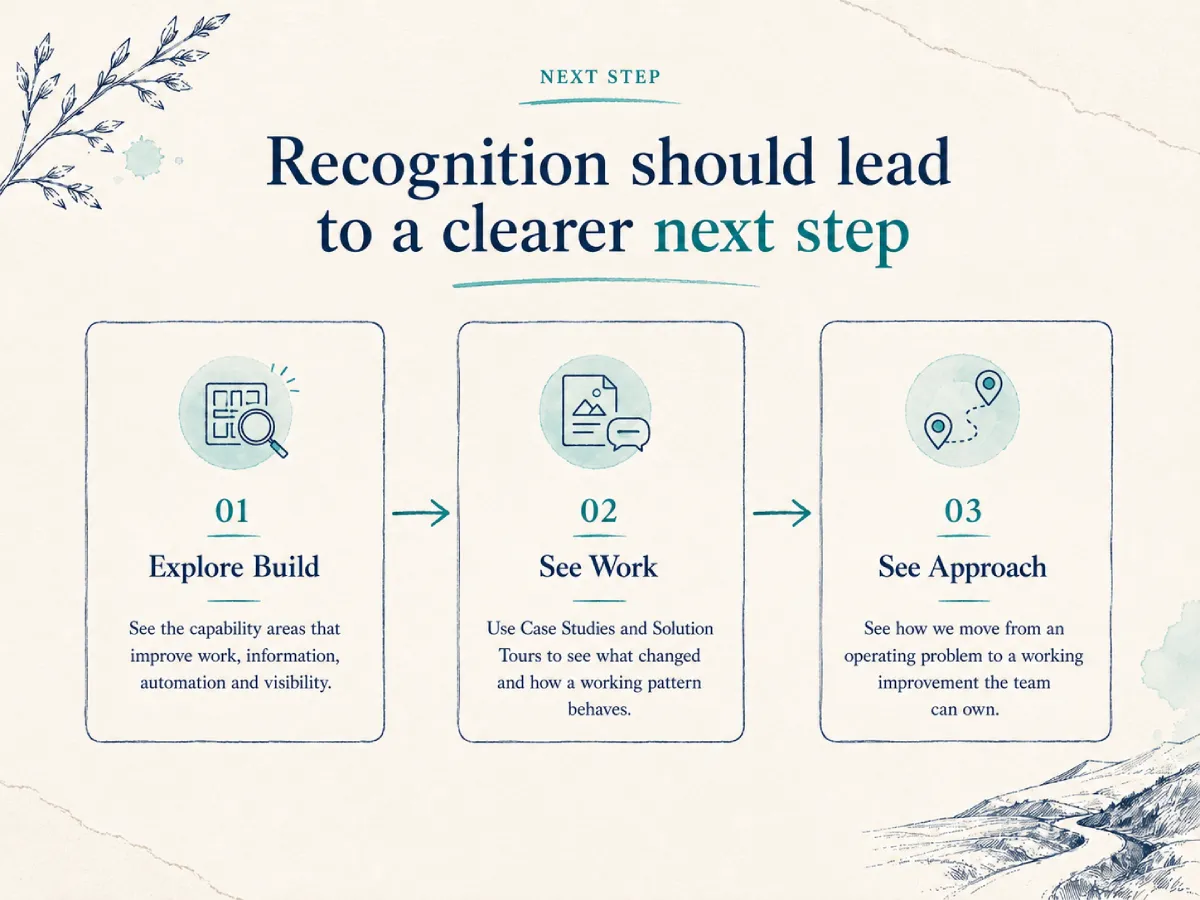
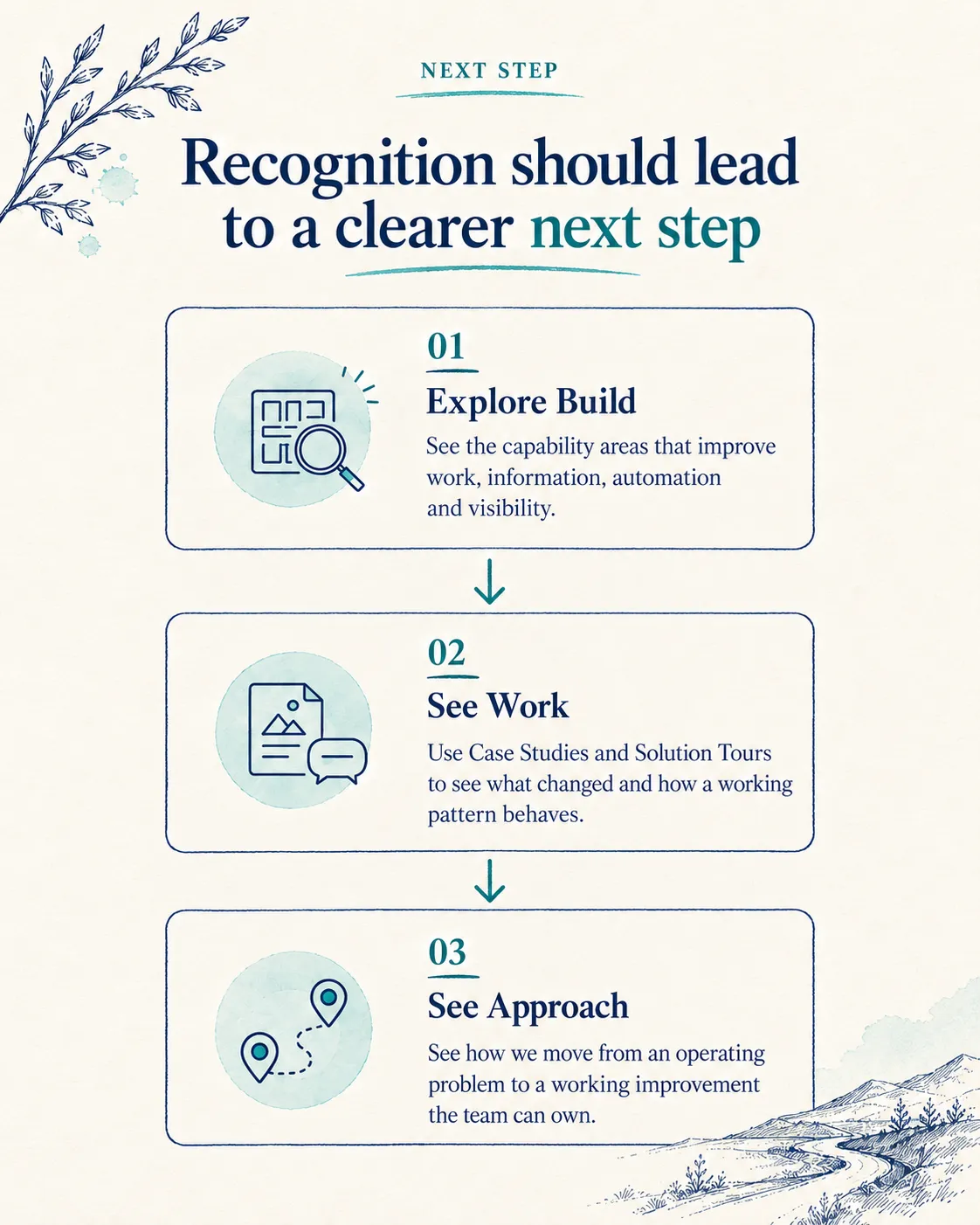
Explore Build
We show the capability areas that can improve work, information, automation, connected systems, visibility and client experience.
Explore BuildSee Work
We use Case Studies to show what changed in real operations, and Solution Tours to show how a working pattern behaves.
Explore WorkSee Approach
We show how we move from a visible operating problem to a working improvement the team can own.
Explore ApproachA complete diagnosis is not required to begin.
We can start with the friction that is easiest to describe: what keeps being searched for, chased, copied, rebuilt or explained repeatedly.
The recurring friction is enough for a first conversation.
We will work backwards from the symptom and identify a practical first area to investigate.